
How to Remove Hard Water Stains From Glassware and Keep Them Gone
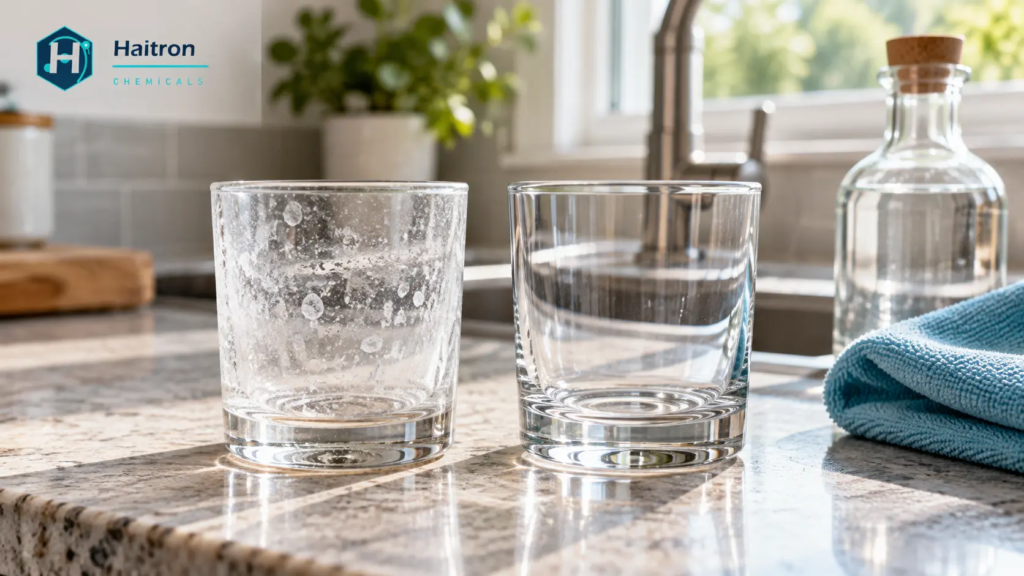
Here’s how to remove hard water stains from glassware: soak your glasses in white vinegar for 15 to 30 minutes, scrub them gently with a soft sponge, rinse in hot water, and dry them right away. The vinegar is a mild acid. It dissolves the chalky minerals that hard water leaves behind.
Before you start, do one quick test. Some cloudy glasses aren’t stained at all. They’re damaged, and no cleaner can fix that.
First, find out what you’re dealing with
Cloudy glasses usually have one of three causes. They look alike, but they need different fixes.
The two minute vinegar test
Dip a cloth in white vinegar and rub a cloudy spot in small circles. Then let it dry.
If the spot looks clearer, you have hard water film. That’s good news, because you can clean it. If nothing changes, the glass is probably etched. Whirlpool and glassmaker Libbey both say etching can’t be fixed.
What is etching?
Etching is tiny damage to the surface of the glass itself. Think of it like a scratched pair of sunglasses. You can clean them all day, but the scratches stay.
Libbey shares an easy clue. Hold the glass up to the light at an angle. Etched glass often shows faint blue, purple, pink, or brown colors, a bit like a rainbow on a soap bubble.
The three common causes
- White, chalky haze or spots, worst at the rim and base. This is hard water film, and you can remove it.
- A slick, greasy feeling haze. This is leftover soap from too much detergent. Wash the glasses in plain hot water and use less detergent next time.
- An even, frosted look with a rainbow tint and a slightly rough feel. This is etching, and it’s permanent.
Some glasses have both film and early etching. You can clean off the film, but the rainbow tint will stay.
How to remove hard water stains from glassware, step by step
You’ll need white vinegar, a sink or deep bowl, a soft sponge or nylon scrubber, and a microfiber towel. Baking soda is handy for stubborn spots.
- Wash the glasses with a little dish soap first. Grease can stop the vinegar from reaching the minerals.
- Lay the glasses on their side and cover them with white vinegar. For light film, half vinegar and half warm water works too.
- Let them soak for 15 to 30 minutes.
- Scrub gently with a soft sponge or nylon scrubber, as Libbey suggests. Pay extra attention to rims and bases.
- Rinse them in hot water.
- Dry them right away with a microfiber towel. Letting glasses air dry is how new spots form.
When the film won’t budge
Give heavy buildup a second soak. You can also mix baking soda with a little water into a soft paste and rub it gently on leftover spots.
Don’t like the smell of vinegar? Try citric acid powder mixed with water. It’s another mild acid that dissolves mineral film.
If a spot is still there after two rounds, it’s probably etching, not a stain.
Pick the right method for your glass
Everyday tumblers can handle a vinegar soak or vinegar in the dishwasher. Thin wine glasses do best with a short soak, a gentle hand wash, and a soft cloth. Keep them out of the dishwasher, and don’t press hard where the stem meets the bowl.
For crystal, painted glass, or glass with a gold or metal rim, follow the maker’s care instructions first. Then test a small spot before any long soak.
Pitchers and vases with narrow necks are easy. Fill them with vinegar, let them soak, and use a bottle brush to reach the bottom.
Can the dishwasher do the work?
Yes, for light film on everyday glasses. Put a dishwasher safe bowl with about one cup of white vinegar on the top rack. Then run a normal cycle with no detergent.
Glasses with heavy cloudiness usually need a hand soak first.
Mistakes that make cloudy glasses worse
- Scrubbing with steel wool or gritty powder. It scratches the glass and can make the haze permanent.
- Adding more detergent. Extra detergent leaves its own film and can speed up etching.
- Mixing hydrogen peroxide and vinegar in one bottle. Some online tips suggest it, but safety guides warn it can form a harsh acid that irritates skin, eyes, and lungs. You don’t need it anyway, because vinegar alone removes the film.
- Mixing vinegar with bleach. Never combine these two.
- Scrubbing etched glass again and again. More effort won’t help. Save your energy.
Why the spots keep coming back
Knowing how to remove hard water stains from glassware fixes today’s problem. Your water decides whether the spots return next week.
Check how hard your water is
Hard water carries dissolved calcium and magnesium. When a drop dries on your glass, those minerals stay behind, like salt left on your skin after a swim in the sea.
The U.S. Geological Survey sorts water by hardness in milligrams per liter:
- Soft: 0 to 60
- Moderately hard: 61 to 120
- Hard: 121 to 180
- Very hard: over 180
To change milligrams per liter into grains per gallon, divide by 17.1. On city water, you’ll find your hardness in your utility’s yearly water quality report. On a well, you can use a lab test or a water test kit for well water.
Simple dishwasher fixes
Libbey suggests a few habits that help:
- Use a rinse aid, so water slides off instead of drying in drops.
- Use less detergent. Libbey suggests under one tablespoon.
- Don’t overload the dishwasher, so everything rinses well.
- Aim for water between 140 and 150°F.
- Hand dry your glasses soon after the cycle ends.
When a water softener helps, and the catch
If your water is hard and spots come back within days, a water softener can fix the cause. Inside it are tiny resin beads that trade calcium and magnesium for sodium or potassium. Fewer minerals means fewer spots. If you’re curious about the sodium part, read how much sodium a water softener adds.
Here’s the catch, and we’re saying it as a company that makes softener resin. Soft water makes detergent much stronger. Libbey says natural soft water or softened hard water is the most common cause of etching. So if you soften your water, cut back on dishwasher detergent and use a rinse aid.
Already have a softener, but the spots are back? It may not be recharging the way it should. Our water softener repair guide walks you through the easy checks.
FAQs
Is it safe to drink from cloudy glasses?
Yes. Hard water film is only a looks problem. Etched glass is also safe to drink from, even though the surface feels a little rough.
Does vinegar hurt glass?
Plain white vinegar is safe for ordinary glass. For crystal or glass with paint or a metal rim, check the care instructions and test a small spot first.
Why do my glasses turn cloudy in the dishwasher but not when I wash them by hand?
A dishwasher dries glasses slowly, so minerals get left behind. Too much detergent, no rinse aid, or a crowded rack makes it worse.
How often should I soak my glasses?
Only when you see film. If you’re soaking them every week or two, fix the cause with rinse aid, less detergent, and quick drying.
Does Haitron sell water softeners?
No. Haitron makes ion exchange resin, the tiny beads used inside water softeners. If you have questions about resin, reach our team through the contact page.
Your next step
Try the vinegar test on your cloudiest glass tonight. If it clears, soak the rest, then check your water hardness. Now you know how to remove hard water stains from glassware, and a few small habits will keep your glasses sparkling.