Water Test Kit for Well Water: What to Buy and What It Really Tells You
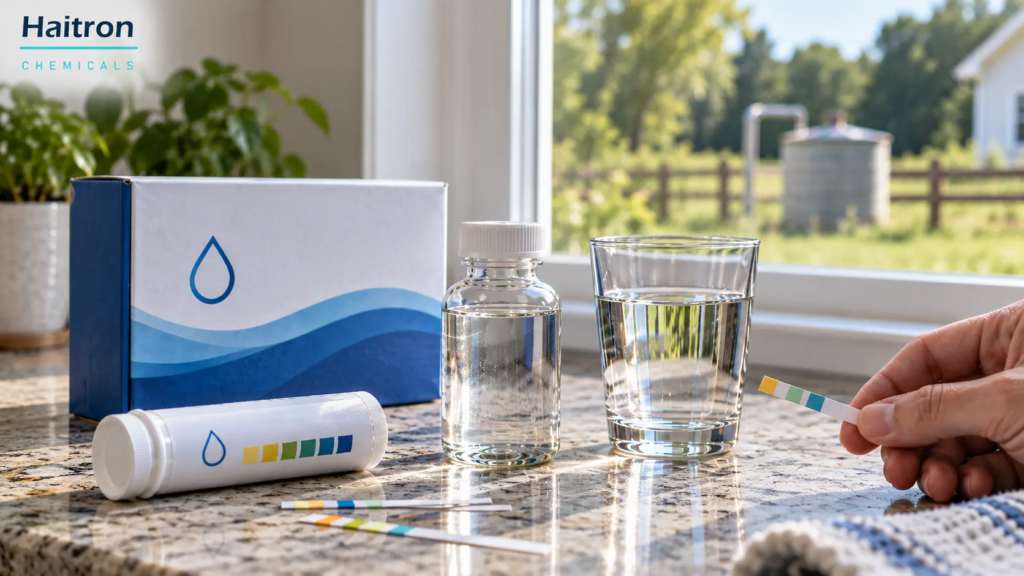
Thinking about buying a water test kit for well water? Here’s the short version. A home strip kit is great for a quick peek at things like hardness, iron, and pH. But for the scary stuff, bacteria and nitrate, you want a certified lab. The best plan for most families is simple: one lab test each year and a cheap water test kit for well water in between.
Why does this matter? Nobody checks your well but you.
Nobody Is Testing Your Well
City water gets tested all the time. Private wells don’t. They sit outside the federal Safe Drinking Water Act, so the job falls to the owner.
And wells do go bad. The USGS sampled about 2,100 private wells across 48 states and found roughly 23 out of every 100 had at least one contaminant above a health limit. Bacteria showed up in as many as one third of a smaller group of wells.
Here’s the tricky part. Most of these things have no color, no smell and no taste. Your water can look perfect and still be unsafe.
What Should You Test Well Water For?
The EPA tells private well owners to test once a year for four things:
- Total coliform bacteria
- Nitrate
- Total dissolved solids (TDS)
- pH
Test more often if a baby, an older adult, or a pregnant or nursing person lives in your home. Test right away if the water changes, if there’s flooding nearby, or after any work on the well.
Then call your local health department. They know what’s common in your area, like arsenic, radon or iron.
Home Test Kit or Lab Test?
Both are useful. They just do different jobs.
A home water test kit for well water gives answers in minutes. Strips cost roughly $15 to $50 and check things like hardness, iron, pH, nitrate, chlorine, and copper. Some include a bacteria test that takes a day or two. Think of it as a smoke alarm. It tells you something may be wrong, not exactly how much.
A mail in lab kit comes with bottles and a prepaid label. You fill them, ship them, and a certified lab emails a report, usually in about 5 business days. Prices in 2026 run around $35 to $55 for coliform and $20 to $40 for nitrate, and full panels cost more.
One more option people forget: many county health departments test cheaply, and some states send free kits to well owners. Ask before you buy anything.
How to Pick a Water Test Kit for Well Water
Use this quick checklist:
- Match your worries. Farm nearby? Nitrate matters. Rusty stains? Iron and hardness.
- Check the lab. For health decisions, pick a kit that uses a state-certified lab.
- Look for bacteria coverage. Strips alone can’t do this well.
- Read the shipping rules. Bacteria samples must reach the lab fast, often within about 30 hours.
- Skip pool strips. Pool and spa kits don’t test drinking water safely.
How to Take a Good Sample
A sloppy sample gives a wrong answer. Slow down for five minutes and do this:
- Wash your hands first.
- Pick a tap that isn’t treated or filtered, if you can.
- Take off any screen or aerator on the tap.
- Let the cold water run a few minutes.
- Don’t touch the inside of the bottle or lid.
- Fill to the line, then chill the sample and mail it the same day.
Collect early in the week too. A sample stuck in a weekend warehouse is wasted money.
What Your Results Mean
Numbers on a report can look scary. Here’s the plain English version and what usually fixes each problem.
Coliform bacteria or E. coli. Stop drinking the water. Boil it or switch to bottled water, then call a well contractor. Wells often need shock chlorination and a repair to whatever let the bugs in.
Nitrate above 10 ppm. That’s the federal limit for public water. It’s especially risky for babies. Reverse osmosis, distillation, or a nitrate-selective strong base anion resin can lower it.
Hard water. Not a health worry, just annoying. Scale on kettles, dull laundry, soap that won’t lather. A softener fixes it using strong acid cation resin beads.
Iron or brown staining. Often an iron filter, sometimes a softener for low levels. Iron also shortens the life of softener resin, so treat it early.
Yellow, tea-colored water. That’s usually tannins. Our guide on tannin removal from well water explains the options.
Lead. Usually comes from your pipes, not the well itself. A softener is not the answer here, as we explain in our post on whether a water softener removes lead.
Where Our Experience Fits In
At Haitron, we make the ion exchange resin that goes inside softeners and many well water systems. So we see the results side of this every day.
The most common mistake? Buying equipment before testing. People order a softener because water “feels hard,” then find out the real problem was iron or tannins. Now the new resin gets fouled and stops working within months.
A test report also tells an engineer things a salesperson can’t guess: your hardness in grains, your iron level, your pH, and your flow rate. Those four numbers decide which resin grade and how much of it your system needs.
Test first. Buy second. It’s cheaper that way.
How Often Should You Test?
- Every year: bacteria, nitrate, TDS and pH.
- Right away: after flooding, new taste or smell, a broken well cap, or any repair work.
- Before you buy treatment: a full panel, so the system matches the water.
- After installing treatment: to check it’s actually working.
Spring is a smart time. Rain and snowmelt push surface water down toward wells.
Mistakes to Avoid
- Trusting a strip test for a bacteria decision
- Sampling from a tap that already has a filter on it
- Letting the bottle sit in a hot car
- Testing once when you buy the house and never again
- Ignoring a “no bacteria” result and skipping the rest of the panel
FAQs
Are home water test kits accurate?
For rough checks, yes. Strips tell you if hardness or iron is high. For health limits like lead and bacteria, trust a certified lab instead.
How much does well water testing cost?
Home kits run about $15 to $50. Lab tests for bacteria and nitrate usually run $20 to $55 each. Some counties do it free.
Can I test well water for free?
Sometimes. Several state labs and county health departments offer free or low cost kits to well owners. Ask your health department first.
How long do results take?
Strips give answers in seconds, bacteria tests in 24 to 48 hours, and lab reports in roughly 5 business days.
Does boiling water make it safe?
Boiling kills bacteria. It does nothing for nitrate, lead, or arsenic, and it actually concentrates them a little.
Final Thoughts
A water test kit for well water is the cheapest insurance you can buy for your family’s drinking water. Start with the yearly lab test for bacteria, nitrate, TDS, and pH. Keep a strip kit in the kitchen drawer for quick checks. Then let the results, not a sales pitch, decide what treatment you need. Already have a report and wondering which resin suits it? Send it to our technical team and we’ll help you read it.