How Much Sodium Does a Water Softener Add? A Simple Guide
How much sodium does a water softener add to your water? Only a little. For every grain of hardness in your water, a softener adds about 1.9 mg of sodium to an 8-ounce glass. An mg (milligram) is a very tiny amount. So if your water has 10 grains of hardness, each glass gets about 19 mg of sodium. In this guide, you will see how much sodium a water softener adds at your hardness level, how to do the easy math, and how to cut it down if you need to.
What Does a Water Softener Do?
Hard water carries a lot of calcium and magnesium. These minerals leave white crust on taps, spots on glasses, and scale inside pipes. If you are not sure what makes water hard, our guide on the difference between hard and soft water explains it in plain words.
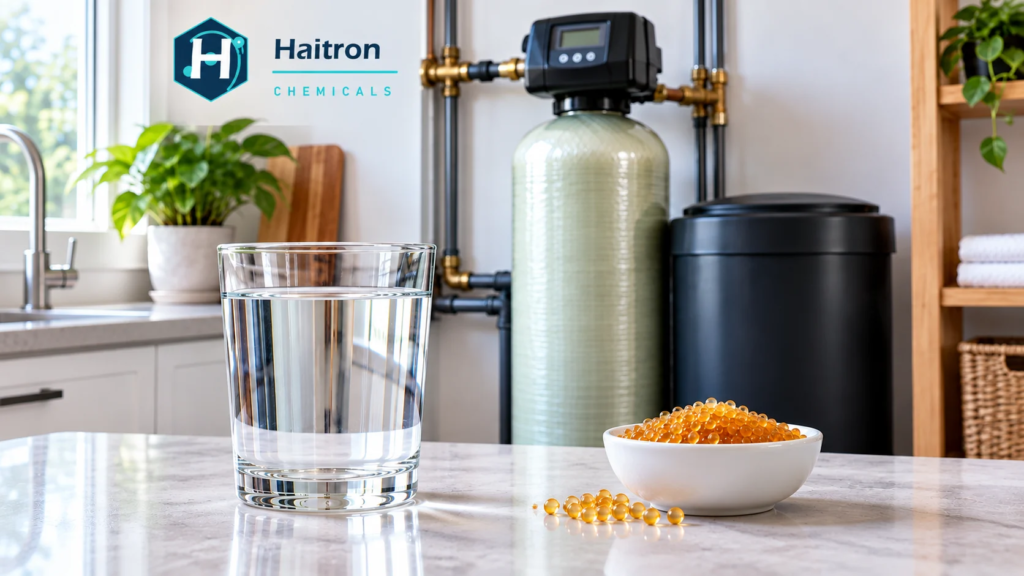
A water softener fixes this with tiny beads inside a tank. The beads grab the calcium and magnesium. In return, they let go of sodium. Think of it like trading cards. A hard mineral goes onto the bead, and a little sodium comes off.
These beads are called ion exchange resin. At Haitron, we make strong acid cation resin, the same kind of bead used in home softeners. So this trade is our daily work.
Does a Water Softener Add Salt to Your Water?
No. It adds sodium, not salt.
The salt stays in a separate brine tank. When the softener cleans its beads, salty water washes over them. Then that salty water goes down the drain. The water you drink never mixes with it.
If your water tastes salty, something is wrong. A clogged drain line or a stuck valve can let salty water slip through. Ask a water expert to check it.
Putting more salt in the tank does not put more sodium in your glass. The salt only helps the beads get clean. Your water hardness decides the sodium. You can learn which salt works best in our guide to water softener salt types.
How Much Sodium Does a Water Softener Add at Your Hardness?
This simple chart shows the sodium added to one 8-ounce glass of softened water.
- 3 grains per gallon: about 6 mg
- 5 grains per gallon: about 9 mg
- 7 grains per gallon: about 13 mg
- 10 grains per gallon: about 19 mg
- 15 grains per gallon: about 28 mg
- 20 grains per gallon: about 37 mg
- 30 grains per gallon: about 56 mg
- 50 grains per gallon: about 93 mg
Water above about 10.5 grains is called very hard. These numbers only show what the softener adds. Most tap water already has a little natural sodium too.
How to Find Your Own Sodium Number
Step 1: Find your water hardness.
If you have city water, look at your yearly water quality report. Hardness may be listed in mg/L or ppm. Divide that number by 17.1 to get grains per gallon.
If you have a well, use a test kit or a lab test. Wondering, is well water safe to drink? Our well water guide shows you what to test for.
Tip: test the water before it goes into the softener.
Step 2: Do the easy math.
- Grains × 1.9 = mg of sodium per 8-ounce glass
- Grains × 7.9 = mg of sodium per liter
- Grains × 30 = mg of sodium per gallon
Example: Sam’s family has 14 grains of hardness. 14 × 1.9 = about 26 mg per glass. If Sam drinks 8 glasses a day, he gets about 210 mg of sodium from softened water.
Why Other Websites Show Different Numbers
Some sites say “7.5 mg per grain” but forget to say per what. The amount is about 7.4 mg per quart, 7.9 mg per liter, and 30 mg per gallon. Mixing up these measurements can lead to incorrect answers.
Many sites also say a glass of softened water has less than 12.5 mg of sodium. That comes from a Mayo Clinic doctor, and it is true for water up to about 7 grains. Harder water adds more.
Is Softened Water Safe to Drink?
For most healthy people, yes.
The 2025 to 2030 Dietary Guidelines for Americans came out in January 2026. They say people age 14 and up should keep sodium under 2,300 mg a day. The FDA says more than 70% of the sodium we eat comes from packaged and prepared food, not water.
Even with 15 grains of hardness, 8 glasses of softened water add about 225 mg of sodium. That is only about one tenth of the daily limit.
What If You Are on a Low Sodium Diet?
This part needs more care. The EPA suggests no more than 20 mg of sodium per liter of drinking water for people on a very strict low-sodium diet of 500 mg a day. A softener goes past that at only about 2.5 grains.
The EPA has also said this number is probably too low. Still, if your doctor limits your sodium, knowing how much sodium your water softener adds helps. Take your daily number to your next visit.
How to Lower the Sodium in Softened Water
You can keep soft water and still drink less sodium.
- Reverse osmosis at the kitchen sink. This small system removes most of the sodium from your drinking water. The rest of your home still gets soft water.
- A hard water kitchen tap. A plumber can keep your cold kitchen tap off the softener. That tap gives you water with only its natural sodium.
- Potassium chloride instead of salt. It works in most softeners and adds potassium instead of sodium. It costs more. If your doctor limits potassium, ask first.
- Distilled water. It has almost no sodium. Our article on drinking distilled water explains if it is a good daily choice.
One common mistake: a regular pitcher filter or fridge filter will not remove sodium.
Still shopping for a system? See how much a water softener costs before you buy.
Keep Softened Water Out of Your Garden
Sodium can build up in soil over time and harm plants. Hook your garden hose to a tap that skips the softener.
Quick Questions
Does a Brita filter remove sodium from softened water?
No. Normal pitcher filters are not made to remove sodium. Reverse osmosis and distilling can remove it.
How much sodium is in a gallon of softened water?
A softener adds about 30 mg of sodium per gallon for each grain of hardness. At 15 grains, that is about 450 mg per gallon.
Is potassium chloride better than salt?
It adds no sodium and softens water the same way. It just costs more per bag.
Final Thoughts
So, how much sodium does a water softener add? Just a small amount, about 1.9 mg per glass for each grain of hardness. For most families, that is nothing to worry about. Find your hardness, do the quick math, and pick reverse osmosis or a hard water kitchen tap if you need less sodium. Now you know exactly how much sodium a water softener adds and what to do about it. If you build or sell softeners and need help choosing resin, feel free to talk to our technical team.
This article is general information, not medical advice. If you have heart, kidney, or blood pressure problems, talk to your doctor about your sodium.