What Is Potable Water? Definition, Treatment Process, and Safety
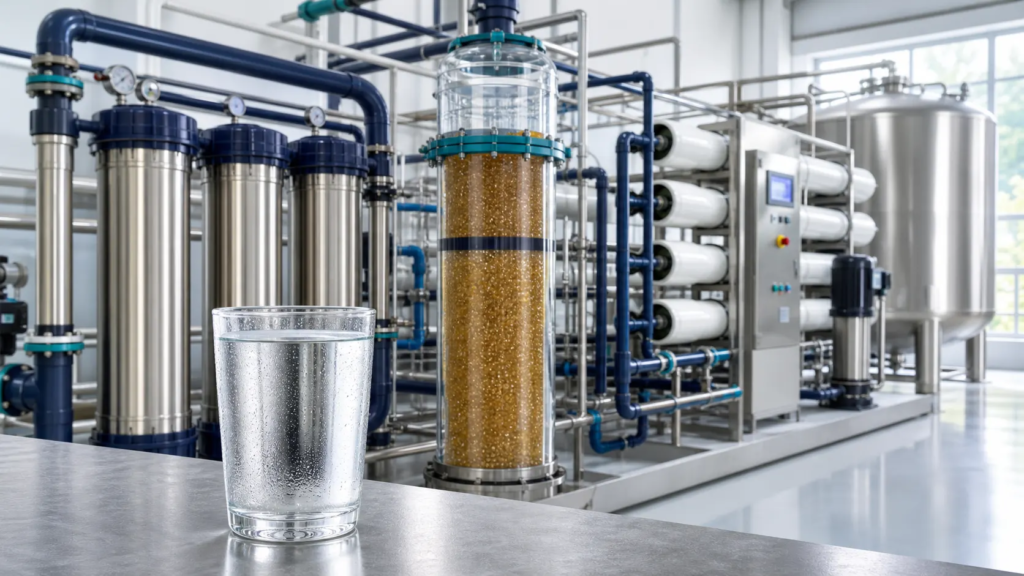
Potable water means water that’s genuinely safe for people to drink, to cook with, and to rely on for other daily household uses. Meeting that bar requires satisfying recognized microbiological, chemical, and physical quality standards. Treatment methods often include coagulation, filtration, disinfection, membrane separation, and ion exchange, chosen based on the specific source water and whatever contaminants show up in it.
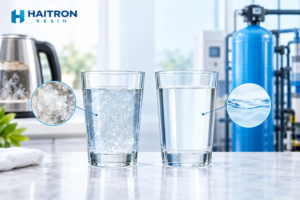
Just because water looks clear doesn’t mean it’s actually safe. Water that appears spotless can still be hiding microorganisms, dissolved salts, nitrate, metals, or other contaminants that no amount of visual inspection would ever reveal. This guide walks through what truly defines “potable” water, why that definition depends on measurable limits instead of visual clarity, and why the treatment approach has to change from one water source to another. Along the way, it points out exactly where ion exchange plays a role in that process and where its usefulness comes to an end.
What Is Potable Water?
Potable water is water that’s genuinely fit and safe for people to drink, based on whatever drinking water standards apply.
The potable water definition comes down to meeting requirements, not how the water happens to look or taste. The potability of water gets judged against limits for microorganisms, chemical contaminants, and physical properties such as turbidity and pH. If you’re asking what potable water is, the short answer is this: water that consistently meets those limits, not just on a lucky test day.
Potable water can be drawn from surface water, groundwater, or treated municipal supplies. Each of these sources begins with its own mix of dissolved solids, organic matter, and microbial risk, so what “potable” actually demands in practice depends a lot on where the water comes from and how it gets treated before reaching a tap. Looking clear doesn’t prove a thing about potability on its own. Nitrate and dissolved metals, for instance, stay completely invisible and tasteless even at levels that genuinely matter. Requirements also shift from country to country and by intended use, so water considered potable in one region might still need extra treatment to satisfy another region’s standards.
Potable Water vs Non-Potable Water
Potable water is fit for people to drink; non-potable water hasn’t been approved for drinking or preparing food.
That difference matters for both safety and how a system gets designed. Non-potable supplies typically run through their own separate piping, specifically to keep them from accidentally cross-connecting with a drinking-water line.
| Factor | Potable water | Non-potable water |
| Drinking | Suitable when compliant | Not suitable |
| Food preparation | Permitted | Not recommended |
| Required treatment | Verified treatment and monitoring | Depends on intended use |
| Common uses | Drinking, cooking, and hygiene | Irrigation, flushing, and industrial processes |
Non-potable water can still work perfectly well for what it’s meant to do. Irrigation and industrial cooling, for instance, rarely call for drinking-water-grade treatment. Potability is specific to the intended use and has to be verified, never just assumed.
What Can Be Present in Potable Water?
Potable water isn’t chemically pure or deionized, and it was never meant to be. Regulations allow a range of natural and controlled substances, as long as they stay under set limits.
Potable water commonly contains:
- Naturally occurring calcium and magnesium (water hardness)
- Controlled disinfectant residuals, such as trace chlorine
- Dissolved salts, within permitted limits
- Measurable parameters like pH, turbidity, and conductivity
Some source water also carries contaminants that need to be specifically removed before it counts as potable, things like nitrate, excess hardness, iron, manganese, heavy metals and certain organic compounds. As one reference point, the EPA sets the maximum contaminant level for nitrate in drinking water at 10 mg/L measured as nitrogen, which roughly matches the WHO’s guideline of 50 mg/L as nitrate ion.
Potable water and ultrapure water aren’t the same thing. Potable water is meant to be safe to drink, while ultrapure water is made for specialized industrial or lab work. Ultrapure water has nearly all its dissolved minerals stripped away, something that’s not just unnecessary for drinking water, but actually undesirable.
How Does the Potable Water Treatment Process Work?
Truth is, there’s no magic bullet that handles every contaminant at once. So instead, potable water treatment breaks the job into a series of steps, each one picking up the slack the last one left behind.
Walk into most municipal or industrial systems and you’ll see the same basic pattern: water moves through several stages in sequence, each targeting its own category of contaminant.
- Screening and pretreatment
It kicks off with the basics, pulling out large debris and suspended material before anything else happens. Miss this step and you’ll pay for it later, with equipment down the line getting damaged or clogged. - Coagulation and clarification
Next, chemical coagulants get mixed in. They cause the tiny suspended particles floating around to clump together into bigger flocs. Once clumped, they’re a whole lot easier to settle out or filter. - Filtration
From there, whatever particles are left get caught by sand, multimedia beds, activated carbon or membranes, and depending on the source, these also pull out some organic compounds and anything giving off an odd taste or smell. - Dissolved-ion removal
Now here’s where filtration falls short. It only grabs particles; dissolved ions slide right past it. That’s the gap in ion exchange, softening, nitrate-selective resin, dealkalization, and membrane treatment fill, tackling hardness, nitrate, and other dissolved substances that filtration alone just can’t touch. - Disinfection
After that comes chlorine, ozone or UV treatment, knocking down microorganisms and giving the water a buffer against regrowth once it heads out into distribution. - Final monitoring and distribution
Nothing gets released without testing first, and even then, it doesn’t stop, monitoring carries on while the water’s in transit, because quality can still shift before it actually gets to someone’s tap.
Source water → Pretreatment → Clarification → Filtration → Ion control → Disinfection → Potable water
The Role of Ion Exchange in Potable Water Treatment
Regular filtration can only do so much – it stops particles, but it has no answer for ions dissolved in water. That’s where ion exchange comes in, and honestly it’s one of the few methods that can actually deal with this problem properly.
- Hardness removal: Strong acid cation resin pulls calcium and magnesium out of the water.
- Metal removal: Specialized cation or chelating resin deals with selected dissolved metals.
- Anion removal: Strong base or selective anion resin targets nitrate and similar anions.
- Polishing: Resin mops up whatever residual ions are left after membrane treatment.
- Resin selection: Comes down to feed water analysis, target quality, flow rate, and how you plan to regenerate it.
One thing worth remembering – ion exchange won’t disinfect water, so don’t rely on it as a stand-alone treatment system. It works best when paired with filtration, clarification, and disinfection.
If you’re weighing up resin options for a drinking water application, take a look at how Haitron’s cation, anion, and specialized resin families stack up against your feed water analysis to find what actually suits your target outlet quality.
How Is Potable Water Quality Verified?
Potable water quality is verified through laboratory testing, operational monitoring, and comparison against the applicable drinking-water requirements, such as the EPA’s National Primary Drinking Water Regulations or the WHO’s Guidelines for Drinking-water Quality, depending on jurisdiction.
Verification typically covers:
- Microbiological indicators
- Turbidity
- pH
- Conductivity or total dissolved solids
- Nitrate
- Hardness
- Selected metals and source-specific contaminants
Check your local water-quality report, or use a qualified laboratory, if you want to verify your own supply. Appearance, taste, and basic home test kits can flag obvious problems, but none of them confirm compliance on their own.
Frequently Asked Questions
Is tap water potable?
Tap water may be potable when it is treated, monitored, and compliant with local drinking-water requirements. Quality can vary by source and distribution system.
Is distilled water potable?
Properly produced and safely stored distilled water can be suitable for drinking, although it contains very few dissolved minerals.
Does boiling make non-potable water potable?
Boiling controls many microorganisms, but it does not remove dissolved salts, nitrate, metals, or many chemical contaminants.
Can ion exchange make water potable?
Ion exchange can remove selected dissolved ions, but potability normally requires a complete treatment and monitoring system that may also include filtration and disinfection.
Conclusion
Potable water is defined by safety and regulatory compliance, not by how clear it looks. Treatment has to match the contaminants in the source water, and no single step covers all of it, ion exchange is one component in a multi-barrier process that also relies on filtration, clarification and disinfection.
Planning a potable-water treatment system? Share your feed-water analysis, flow rate and required outlet quality with Haitron’s technical team for an appropriate resin-family recommendation.