Is Well Water Safe to Drink?
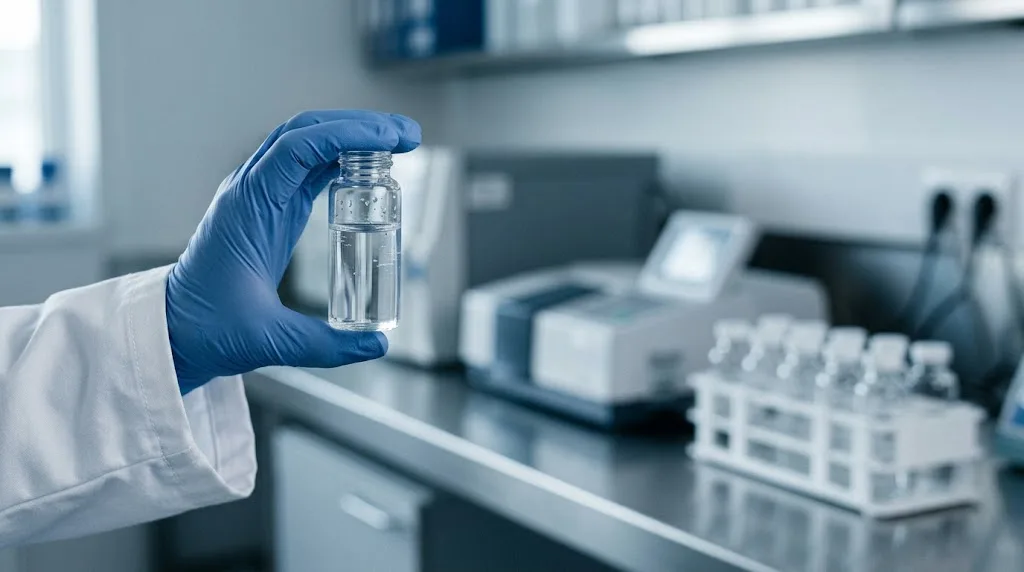
Is well water safe to drink? Most of the time, yes. But nobody can promise that about your well until you test it. A private well is not checked by anyone the way city water is. Water can look clear, smell clean and taste perfect, and still carry things that make people sick. So the honest answer to whether water is safe to drink is this: it often is, and a simple water test is the only way to know for sure.
What You’ll Learn Here
You will learn what gets into a well, which tests are worth paying for, what the safe numbers are, and what to do if one of your results comes back high.
Nobody Checks Your Well But You
City water has someone behind it. Samples get taken on a set day. Results get written down. If something goes wrong, someone must fix it and tell you.
A private well has none of that. There is no set schedule, no record of past maintenance, and no clear contact for help.
Whatever comes out of your tap was in the ground an hour ago. Nothing was added and nothing was removed. If you never test it, it never gets tested.
That is the real risk behind the question: is well water safe to drink. Not that groundwater is dirty, because usually it is not. The risk is that nobody is watching it.
Clear Water Does Not Mean Clean Water
This is the part people get wrong.
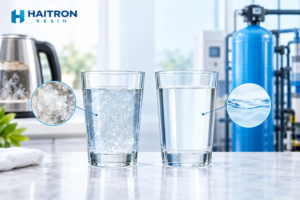
Your nose and tongue are good at catching small problems. Iron leaves orange stains. Sulfur smells like rotten eggs. Hard water leaves white crust on the kettle.
Your nose and tongue are useless for the things that really hurt you. Nitrate has no taste, no smell and no colour. Arsenic is invisible. Lead and germs can both be present in well water.
If you ask, “Is well water safe to drink?” just because it has always tasted fine, taste alone cannot tell you whether the water is safe.
What Gets Into a Well
Three groups. Keep them apart.
Things that make you sick fast. Germs like E. coli. They come from above the ground. A cracked well cap. A broken seal. A septic tank too close. Farm animals. Flood water running back down the hole. People get sick within days.
Things that build up slowly. Nitrate from fertilizer and animal waste. Arsenic, fluoride, uranium and manganese that leak out of the rock all by themselves. Lead from old pipes. These take years to cause harm. Only a test will find them.
Things that are just annoying. Hard water, iron, and that rotten egg smell. They ruin kettles, laundry and taps. They rarely hurt anyone.
That middle group often has nothing to do with pollution. Arsenic and fluoride sit naturally in the rock in many parts of the world. A quiet countryside well is not automatically a safe one.
The Numbers That Matter
The World Health Organization sets guideline values for drinking water. Most countries build their own rules on top of these. They are advice, not law, so your country’s limit may be tighter or looser.
| What it is | WHO guideline value | Why it matters |
| E. coli | None allowed in a 100 mL sample | Sewage got in. Act today. |
| Nitrate | 50 mg/L | Most dangerous for babies |
| Nitrite | 3 mg/L | Works the same way as nitrate |
| Arsenic | 0.01 mg/L | Raises cancer risk over years |
| Lead | 0.01 mg/L | No safe level, worst for children |
| Fluoride | 1.5 mg/L | Damages teeth and bones over time |
| Manganese | 0.08 mg/L | Affects the brain, also stains |
| Uranium | 0.03 mg/L | Poisonous as a metal, not by radiation |
One detail most pages skip. The germ to watch is E. coli. Total coliform is a much wider family that includes harmless soil germs. So a total coliform result is a reason to look closer, not proof that sewage got in.
How to Test Your Well Water
Once a year, test for germs and nitrate. These two cover the fastest risk and the most common chemical one. They are cheap.
Every few years, run a bigger panel. Arsenic, fluoride, lead, manganese and uranium. Add hardness if scale bothers you. Ask your local water office which of these are common in your area’s rock. That one question shapes your list more than anything else.
Test straight away if:
- the taste, smell or colour changes
- the well or the ground around it floods
- anyone opens up or repairs the well
- people in the house keep getting stomach bugs
- someone is pregnant, or a baby is coming
- you just moved in and have never seen a result
Use a proper lab. Home test strips are fine for a quick look, but not for a health decision.
What to Do If a Result Is High
Stop drinking it. Switch to bottled water or another safe source. Then treat the water. Then test again to check the treatment worked. Do not skip that last test. While you wait, many people ask if you can drink distilled water instead.
Here is the rough map:
- Germs: clean out the well and fix whatever let surface water in. A UV lamp guards it afterwards.
- Nitrate: reverse osmosis or ion exchange.
- Arsenic, uranium and metals: special filter media or reverse osmosis. In larger systems, chelating resin is used to grab metals out of water.
- Hard water and iron: a softener with a filter in front of it. Most softeners hold strong acid cation resin inside. Our guide on does a water softener removes iron explains what it can and cannot handle, and how much a water softener covers the cost side.
Boiling needs its own warning. Boiling kills germs. That is why it is standard emergency advice. But boiling does nothing to chemicals. You lose water as steam and leave the bad stuff behind, so boiling makes nitrate and arsenic slightly worse.
Frequently Asked Questions
Can you get sick from drinking well water?
Yes. Most cases come from germs. They usually get in after heavy rain or a flood.
Is well water safe to drink for babies?
Only after you test it. Nitrate is the reason. Babies are far more sensitive to nitrate than adults. Formula mixed with high nitrate water is the usual path.
Does boiling make well water safe to drink?
For germs, yes. One minute at a rolling boil. For chemicals, no. Boiling makes them stronger.
Is well water safe to drink if it has always tasted fine?
Taste tells you about iron and minerals. It tells you nothing about nitrate, arsenic or germs. Those three are the ones most likely to hurt someone.
Does a water softener make well water safe to drink?
No. A softener swaps hard minerals for sodium. It protects your pipes and kettle. It is not a safety device and it will not touch germs or nitrate.
How long does a water test stay valid?
Think of it as a photo, not a promise. Groundwater changes with rain, season and land use nearby. That is why once a year is the advice.
Final Verdict
Well water is often really good water. Filtered by soil and rock. No chlorine taste. Many families drink it happily for their whole lives.
The problem was never that wells are dirty. It is that a well is the only drinking water source where quality control is entirely down to you. And the most dangerous things in it are the ones you cannot see, smell or taste.
So, is well water safe to drink? It can be, it usually is, and you cannot know which until you test. Book the germ and nitrate test this month. Ask locally what else your rock tends to give up. Then act on the number, not the taste. To go deeper into large scale treatment, our water treatment applications page is the next stop.