Industrial Water Treatment: Methods, Systems, and How to Choose the Right Process
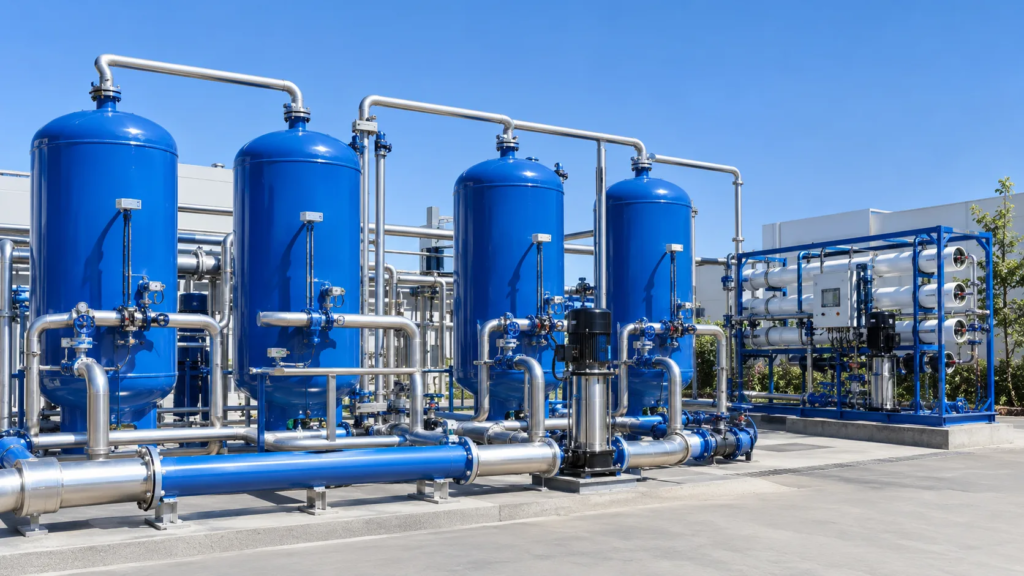
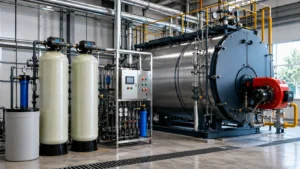
Industrial water treatment is something almost every plant manager ends up thinking about sooner or later, whether they planned to or not. In simple terms, it means getting water ready for use inside a facility, then treating it again before it goes back out or gets reused. That covers a lot of ground: filtration, softening, ion exchange, reverse osmosis, chemical dosing, and everything in between.
Water shows up in nearly every industrial process, whether it’s cooling equipment, generating heat, rinsing parts, or going into a product as an ingredient. The problem is that untreated or poorly treated water doesn’t just sit there quietly. Within months, it can scale up a boiler, eat away at pipes through corrosion, or clog a membrane so badly it stops working the way it should.
This guide is meant to walk through what industrial water treatment really involves in practice, the main methods you’re likely to come across, and how to think through which approach actually makes sense for your plant. The right choice usually comes down to a few key factors: where your water is coming from, what kind of equipment you’re running, and what your discharge requirements look like. Get those three things sorted out first, and the rest of the decision tends to fall into place.
What Is Industrial Water Treatment?
Industrial water treatment covers two directions: upstream treatment (preparing raw water for use) and downstream treatment (cleaning water before it’s discharged or reused). Water has to be made cleaner, potable, or ultra pure before it’s used, and then treated again after use, before it gets released or reused.
Water in a plant serves many roles beyond drinking water. Industrial process water supports washing, cutting, coating, plating, rinsing, spraying, boilers, and cooling towers, and each of these uses comes with its own quality requirement. Boiler feedwater, for example, needs to be nearly mineral free, while cooling tower water has more tolerance for dissolved solids but still needs proper biological control.
Why Industrial Water Treatment Matters
Poor water quality doesn’t just look bad on a lab report, it costs real money. When water treatment isn’t handled well, things like corrosion on costly equipment, weaker product quality, and a bunch of other expensive operational headaches tend to follow.
On a global scale, this isn’t some niche concern either. Industry and energy together account for roughly 19% of global freshwater withdrawals, and that share climbs a lot higher in industrialized regions. Industrial withdrawal ranges from about 5% in Africa to as much as 57% in parts of Europe. With water growing scarcer by the year and regulations only getting stricter, treating and reusing water efficiently isn’t really optional anymore for most industries, it’s just become part of doing business.
Untreated or poorly treated water typically causes three problems:
-
Scale buildup on boilers and heat exchangers, which increases fuel use and shortens equipment life
-
Corrosion from dissolved oxygen, low pH, or aggressive ions
-
Microbiological growth, including bacteria like Legionella in cooling towers
Main Types of Industrial Water Systems
Not all industrial water gets treated the same way. The treatment approach is usually built around whatever system that water is feeding into.
Boiler Water
Boiler feedwater needs very low hardness, silica, and dissolved oxygen, since even small amounts of scale-forming minerals can damage a boiler over time.
Cooling Water
Cooling water circulates through cooling towers and heat exchangers. Treatment here mostly focuses on keeping scale, corrosion, and microbiological growth such as Legionella under control.
Process Water
Process and rinse water needs vary quite a bit by industry. Food and beverage, electronics, and pharmaceutical plants each work with different purity targets, and some manufacturing steps call for ultrapure water to keep things running properly.
Wastewater Reuse
Wastewater and reuse streams need treatment before they’re discharged or recycled. Most petroleum refineries, along with chemical and petrochemical plants, run their own onsite facilities to treat wastewater so pollutant levels stay within local or national discharge regulations.
Core Industrial Water Treatment Methods
Most plants don’t stick to just one method. They combine several, depending on what the water actually needs.
Filtration
This is the first step in nearly every system, no exceptions really. Coarse filtration takes care of large particles using screens or meshes, and then finer filtration steps in to handle sediment, organic material, and turbidity before the water heads into more sensitive treatment stages.
Softening
Softening deals with hardness, mainly calcium and magnesium, and that’s what causes scale in the first place. Most plants handle this with ion exchange resin, where those hardness ions basically get traded out for sodium.
Ion Exchange Demineralization
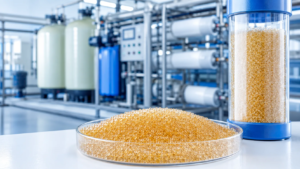
Ion exchange relies on resin beads to pull out unwanted dissolved ions and swap them for hydrogen or hydroxide ions instead, which is how you end up with low-mineral or fully demineralized water. The process depends on ion exchange resins, and it typically needs acid and alkali on hand for regenerating the resin. This method really shines for boiler feedwater, condensate polishing, and any application where quality control has to be extremely tight.
Reverse Osmosis
Reverse osmosis, or RO, pushes water through a semi-permeable membrane under pressure, and that pressure is what keeps most dissolved solids, bacteria, and larger contaminants from getting through. It can remove contaminant ions or particles bigger than water molecules themselves, thanks to some of the finest pore sizes you’ll find among membrane filtration types. That’s a big reason it’s used so often as a first-pass purification step, us
Ion Exchange vs. Reverse Osmosis: Which Is Right for You?
This is one of the most common decisions plants run into, and honestly, there’s no single winner here. It really just depends on your water and what you’re actually trying to achieve.
In practice, a lot of high-purity systems, think semiconductor plants, pharmaceutical manufacturing, or ultrapure boiler feed, end up using both methods together as part of their industrial water treatment setup. RO handles the bulk of dissolved solids first, and then ion exchange resin steps in to polish the water down to its final purity target. Running them this way cuts down on regenerant chemical use and helps the resin last a lot longer compared to relying on ion exchange alone straight from raw water.
How to Choose the Right Treatment Process
There’s no single “best” method here. Honestly, the right choice really just comes down to a handful of core factors, and most plants end up weighing them together rather than picking one in isolation.
-
Raw water chemistry. Before settling on anything, test hardness, silica, TDS, and organics so you actually know what you’re working with.
-
End-use requirement. Boiler feedwater calls for a very different quality target than what cooling tower makeup water needs.
-
Discharge regulations. Whatever downstream treatment ends up getting used, it has to meet local or national limits before any release happens.
-
Operating costs. Don’t just look at the upfront equipment cost, energy use, chemical consumption, and waste disposal all add up over time and deserve equal weight.
-
Scale of operation. Smaller systems can often get by fine with just one method, while high-purity or high-volume plants usually need a multi-stage train to keep up.
Common Mistakes in Industrial Water Treatment
-
Skipping a proper water analysis before picking out equipment, which usually ends up leaving plants with undersized or mismatched systems
-
Treating symptoms instead of causes, like adding scale inhibitor instead of actually addressing hardness at the source
-
Ignoring regeneration or membrane maintenance schedules, which quietly shortens the life of both resin and membranes over time
-
Choosing one method for the whole plant when different systems, boiler, cooling, process water, actually call for different treatment approaches
-
Underestimating wastewater and discharge requirements until a compliance issue pops up and forces a costly retrofit
Cost and Maintenance Considerations
Industrial water treatment isn’t something you buy once and forget about, it’s really an ongoing operating cost that sticks around for the life of the equipment. Ion exchange systems need periodic resin regeneration and eventually full resin replacement down the line. RO systems, meanwhile, need regular membrane cleaning along with periodic replacement of their own. Chemical dosing programs need consistent monitoring too, otherwise they stop being effective without anyone noticing right away.
Choosing well-matched resin or membrane specifications up front, and pairing that choice with a solid monitoring routine, usually works out cheaper over the equipment’s life than repeatedly replacing undersized or mismatched components down the road.
Frequently Asked Questions
What’s the difference between industrial and municipal water treatment?
Municipal treatment is really about covering general public use at a broad safety standard. Industrial water treatment, on the other hand, is built around one specific process, like a boiler or a cooling tower, and it usually calls for much tighter purity limits than what drinking water needs.
How often does industrial water treatment equipment need maintenance?
That really depends on the system you’re running, but resin generally needs regeneration every few days to a few weeks, and full replacement every several years down the line. RO membranes need periodic cleaning too, along with replacement every so often.
Can industrial wastewater be reused on-site?
Yes, quite often actually. With the right treatment in place, whether that’s filtration, ion exchange, or RO, wastewater can be reclaimed for things like cooling or rinsing, which cuts down on both water costs and how much gets discharged.
Is reverse osmosis better than ion exchange?
Not really, they just handle different jobs. RO is great at bulk removal, while ion exchange is more selective and can reach much lower ionic levels. A lot of high-purity systems end up using both together.
What water quality does a boiler actually need?
Generally speaking, very low hardness, silica, and dissolved oxygen. The exact limits shift depending on boiler pressure though, higher pressure usually means tighter control is needed.
Does this help with sustainability goals?
Yes, it does. Reusing process water cuts down on freshwater withdrawal and discharge, and that ties directly into both compliance requirements and broader sustainability targets.
Softening or full demineralization, how do I know which one?
Softening only removes hardness, which works fine for cooling systems and low-pressure boilers. Demineralization strips out nearly all ions instead, and that’s what’s actually needed for high-pressure boilers along with other high-purity applications.
Where does resin selection fit in?
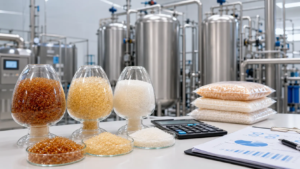
If you’re not entirely sure which resin matches your water, Haitron manufactures ion exchange resins for softening, demineralization, and ultrapure water, and their team can help you match one to your specific system.
Conclusion
Industrial water treatment isn’t really one single technology, it’s more of a combination of methods matched to your water source, your equipment, and your discharge requirements. Getting the water chemistry right at each stage is what ends up protecting your equipment, keeping operating costs under control, and making sure you stay compliant along the way.
If you’re weighing ion exchange resin options for softening, demineralization, or ultrapure water polishing, Haitron’s technical team can help match a resin to your specific water chemistry and system. Request a quote to get started.