Compact Water Softener: How to Choose the Right Small System for Your Home
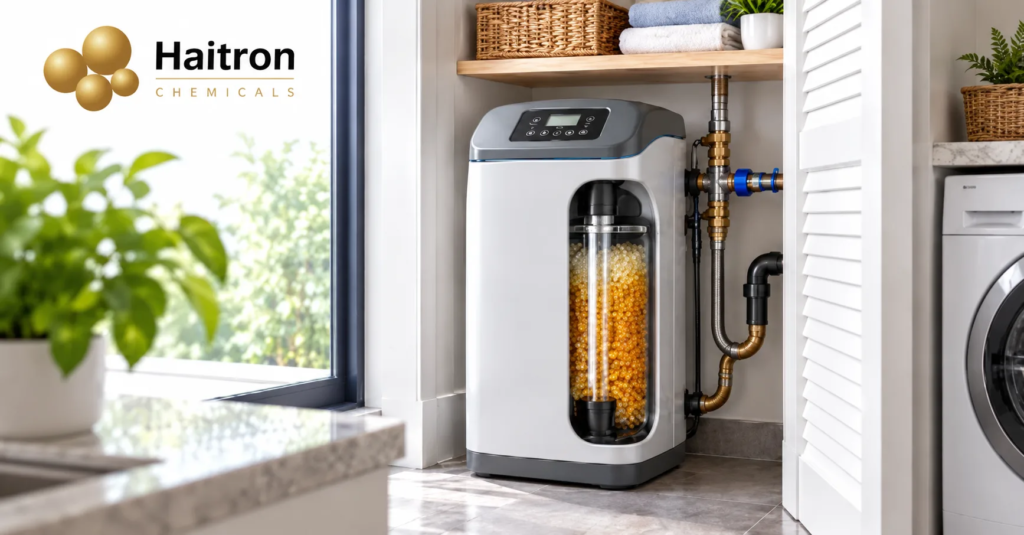
A compact water softener is a small ion exchange unit that removes the calcium and magnesium behind hard water, in a single cabinet that takes far less room than a standard two tank system. It suits apartments, condos, RVs and small houses. Most models serve 1 to 4 people and fit in a closet or under a sink.
Are you tired of crusty taps and spotty glasses but short on space? This guide shows you how to size a unit, what features matter, and when a small unit isn’t enough.
What Is a Compact Water Softener and How Does It Work?
A compact water softener works like any home water softener. Hard water flows through a tank of resin beads. The beads grab calcium and magnesium and release sodium or potassium instead. When the beads fill up, a salty brine rinse recharges them. Compact units simply fit the resin and brine into one cabinet.
Think of the resin as a sponge that only soaks up hardness. Once it’s full, you squeeze it out with salt water and it works again. That rinse is called regeneration.
The resin does the real work. Most household water softener resin is strong acid cation resin, a gel bead made for softening. It’s also the resin family Haitron manufactures for softening use.
Who Needs a Small Water Softener?
A small water softener makes sense when space, not hardness, is your main limit. Good fits include:
- Apartments and condos with a utility closet
- RVs, boats and tiny homes
- Rentals, where a quick connect unit can move with you
- Homes of 1 to 4 people with hard or moderately hard water
Larger families on very hard well water usually need a full size water softener for house use.
How Hard Is Your Water?
Test before you buy. The USGS classifies hardness as calcium carbonate in milligrams per liter. Softener makers use grains per gallon (gpg), and one gpg equals about 17.1 mg/L.
| Hardness level (USGS) | mg/L | gpg | Should you soften? |
|---|---|---|---|
| Soft | 0 to 60 | 0 to 3.5 | Usually not |
| Moderately hard | 61 to 120 | 3.5 to 7 | Optional |
| Hard | 121 to 180 | 7 to 10.5 | Yes, for most homes |
| Very hard | Over 180 | Over 10.5 | Yes |
City water users can find hardness in the yearly water quality report. If you’re on a private well, use a home test kit or a lab test.
What Size Home Water Softener Do You Need?
Use this formula: people × 75 gallons a day × hardness in gpg = grains per day. Then multiply by 7 for weekly demand. The 75 gallon figure is the common industry sizing baseline.
Say two people have 10 gpg water. They need 2 × 75 × 10 = 1,500 grains a day, or 10,500 a week. A 24,000 grain compact unit would regenerate about every two weeks. That’s a comfortable fit.
Now take four people at 20 gpg. They need 6,000 grains a day. A 24,000 grain unit would regenerate every four days, which wastes salt and water. That home needs a bigger system.
Iron and manganese raise demand too, so test for them on well water.
Compact vs Standard vs Salt Free: Which Should You Choose?
| Type | Footprint | Typical household | Removes hardness? | Best for |
|---|---|---|---|---|
| Compact water softener (cabinet) | One cabinet | 1 to 4 people | Yes | Apartments, condos, small homes |
| Standard two tank softener | Resin tank plus brine tank | 3 to 6 or more people | Yes | Larger homes, very hard water |
| Portable softener | Small tank, manual recharge | 1 to 2 people | Yes, limited capacity | RVs, boats, travel |
| Under sink point of use unit | Fits one sink cabinet | One tap only | Yes, at that tap | Kitchen or single fixture |
| Salt free conditioner | Small cartridge | Any | No, it only reduces scale sticking | Areas that limit brine discharge |
The key takeaway is that only ion exchange units actually remove hardness. Salt free systems change how minerals behave, but your water stays hard.
Do You Need a Water Softener for a Tankless Water Heater?
Often, yes. Tankless heaters push water through narrow heat exchanger passages, and scale clogs them fast. Noritz’s installation manual says damage from water above 12 gpg (200 mg/L) is not covered by its limited warranty, and it calls for softening or treatment in hard water areas.
Install the softener on the cold line before the heater. Then check the flow rate. If the softener’s maximum flow is lower than what your heater draws during a shower, you’ll feel the pressure drop. Eccotemp’s tankless guide also notes that softening cuts scale but doesn’t replace routine flushing and inlet filter cleaning.
What Features Make the Best Home Water Softener?
The best water softeners for home use share a few traits:
- Metered valve: It regenerates based on the water you actually use, not on a timer, which saves salt.
- Built in bypass: It lets you shut off softening during repairs.
- NSF/ANSI 44 certification: This is the standard for residential cation exchange softeners.
- Quality resin: Uniform, durable beads hold their capacity longer.
- True dimensions: Measure your height clearance, because some “compact” units stand over 40 inches tall.
- Drain and power access: Regeneration needs a drain line, and most units need an outlet.
Common Mistakes to Avoid
- Picking by the “people” label. Hardness matters as much as household size.
- Forgetting the drain. No drain nearby means messy, costly plumbing work.
- Letting the salt run out. Small brine tanks empty fast, so check them monthly.
- Expecting it to filter. A softener doesn’t remove lead. For that, choose a certified lead filter for water.
What Are the Limitations of a Compact Water Softener?
A compact water softener holds less resin, so it regenerates more often in very hard water. The small brine tank needs frequent refills, and some buildings restrict brine discharge.
Softened water also carries a little extra sodium. If you’re on a low sodium diet, use potassium chloride or keep one unsoftened kitchen tap. A softener won’t fix chlorine taste either. A GAC water filter handles that job.
Final Thoughts
Start with three steps. Test your hardness, run the grains formula, then measure your space, including height and drain access. If the numbers fit, a compact water softener gives you soft water without giving up a closet.
Want to see how resin fits into bigger systems? Explore our water treatment applications.
FAQs
Can I install a small softener myself?
Many owners do, if they can cut into a water line and reach a drain. Check your local plumbing codes first. Some areas require an air gap on the drain line or a licensed installer.
How much salt does a compact unit use?
It depends on your hardness, water use and valve settings. Metered units usually use less salt than timer units, because they only regenerate when the resin is actually spent.
Does a home water softener work on well water?
Yes, it works on hardness. Well water often carries iron or manganese, which can foul the resin, so test for both. High levels may need a filter before the softener.
Can I keep a softener outdoors?
Most units need protection from freezing and direct sun. Check the manufacturer’s rated temperature range, and use an insulated enclosure if you must install one outside.
Does Haitron supply water softener resin?
Yes. Haitron manufactures strong acid cation resin used for softening, along with other ion exchange resins. You can request a quote through the contact page.