GAC Water Filter: What It Removes, How It Works and When to Use One
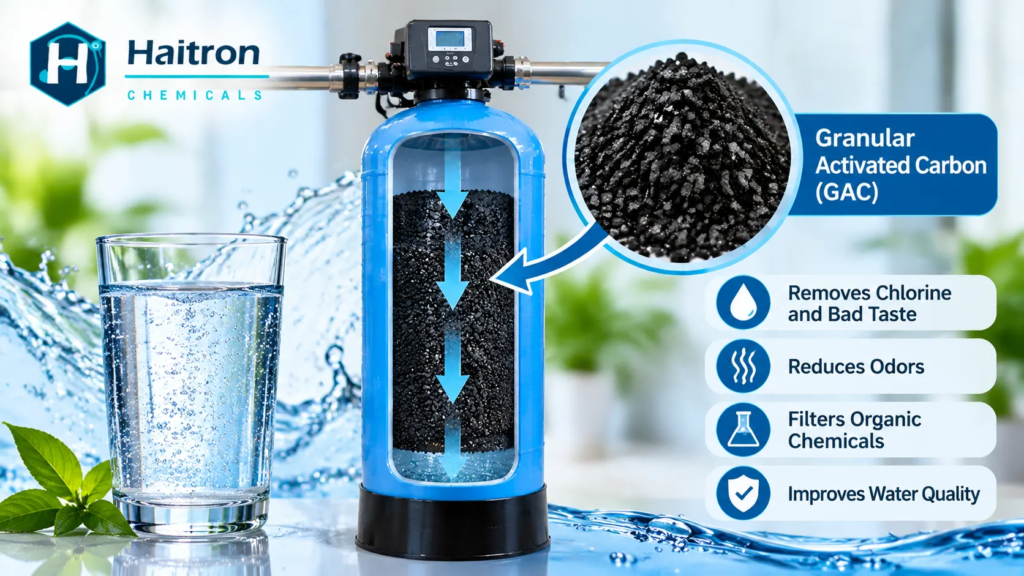
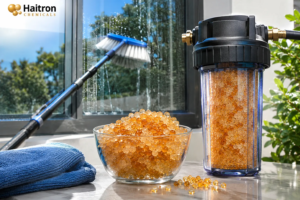
A GAC water filter is a filter packed with granular activated carbon, a loose, sand like media that traps chemicals as water flows through it. It’s excellent at removing chlorine, bad tastes, odors and many organic chemicals. It doesn’t remove hardness, nitrate, fluoride or bacteria.
That mix of strengths and blind spots is what most buyers miss. This guide covers both, so you can pick the right carbon filtration setup the first time.
What Is Granular Activated Carbon?
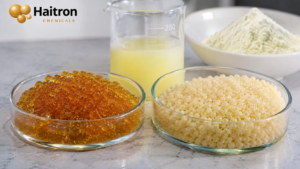
Granular activated carbon (GAC) is carbon rich material, such as coconut shells, coal or wood, that’s heated to create a huge network of tiny pores. Those pores give it an enormous internal surface. Chemicals in water stick to that surface, a process called adsorption, and stay trapped inside the granules.
Think of each granule as a sponge full of microscopic rooms. Chemical molecules wander in and get stuck to the walls.
GAC isn’t new. Activated carbon in granular form was first used in 1910 in Reading, England, to remove chlorine from water.
How Does a GAC Water Filter Work?
Water flows through a bed of loose carbon granules inside a cartridge or tank. As it moves, chlorine and organic molecules cling to the carbon. Chlorine actually reacts with the carbon and turns into harmless chloride. The longer water stays in contact with the carbon, the more it removes.
That contact time has a name: empty bed contact time (EBCT). It’s simply the carbon bed volume divided by the flow rate.
Worked example: one cubic foot of carbon holds about 7.48 gallons of space. At a flow of 2 gallons per minute, EBCT = 7.48 ÷ 2 ≈ 3.7 minutes. Double the flow and contact time halves, so removal drops.
Most systems put a sediment filter first. Dirt and rust particles would otherwise clog the carbon.
What Do Carbon Filters Remove From Water?
Activated carbon filtration works best on chemicals that affect taste and smell, and on many organic compounds. It handles chlorine, many volatile organic compounds like solvents and fuel chemicals, some pesticides, and some PFAS. It doesn’t remove dissolved minerals, salts, nitrate, fluoride or germs, so it’s rarely a complete solution alone.
| Usually reduced by GAC | Not removed by GAC |
|---|---|
| Chlorine, taste and odor | Hardness (calcium, magnesium) |
| Volatile organic compounds (VOCs) such as solvents and fuel chemicals | Nitrate |
| Some pesticides | Fluoride |
| Some PFAS | Bacteria and viruses |
| Small amounts of hydrogen sulfide (rotten egg smell) | Chloride, sodium and most dissolved metals |
The University of Georgia Extension notes an activated carbon filter alone can remove only trace hydrogen sulfide, under 0.3 ppm. In 2024, the US EPA named granular activated carbon one of the best available technologies for removing PFAS from drinking water.
GAC vs Carbon Block vs Powdered Activated Carbon: Which Is Better?
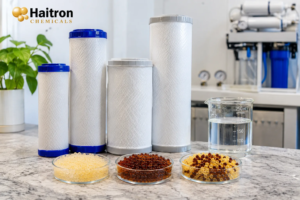
All three use activated carbon. The difference is the form. GAC is loose granules with high flow. Carbon block is finely ground carbon pressed into a solid, giving longer contact and finer filtering at lower flow. Powdered activated carbon is dosed into water at treatment plants, used once, then settled out.
| Feature | GAC | Carbon block | Powdered activated carbon |
|---|---|---|---|
| Form | Loose granules | Solid pressed block | Fine powder |
| Flow rate | High | Lower | Not a filter; dosed into water |
| Contact time | Shorter per cartridge | Longer | Mixed in a tank |
| Cyst removal | Not reliable | Some are certified for cysts | No |
| Typical use | Whole house tanks, plants, pretreatment | Under sink and pitcher filters | Seasonal taste and odor control at plants |
| Reuse | Can be reactivated | Replaced | Used once |
Carbon block particles are 7 to 19 times smaller than GAC granules, according to Water Technology magazine. That’s why blocks filter finer but flow slower.
When Is a GAC Water Filter the Right Choice?
Choose GAC when you need high flow and long media life: whole house systems, wells with chemical contamination, and pretreatment before reverse osmosis or ion exchange. It’s also standard at municipal water treatment plants. For a single kitchen tap focused on cysts or lead, a certified carbon block often fits better.
Real world examples:
- Whole house city water. A large GAC tank removes chlorine taste at every tap without cutting water pressure.
- Contaminated private wells. Connecticut’s Department of Energy and Environmental Protection uses two GAC canisters in a row for wells polluted with fuel or solvent chemicals. When chemicals show up after the first canister, the second is moved forward and a fresh one goes behind it.
- Industrial pretreatment. GAC strips chlorine before water reaches ion exchange resin or membranes, which chlorine can damage.
How Do You Choose a Carbon Water Filter System?
Start with a water test, then match the filter to the contaminant you actually have. Look for certification to NSF/ANSI 42 for chlorine, taste and odor, and NSF/ANSI 53 for health related contaminants. Then size the carbon bed for your peak flow so water gets enough contact time.
Tips:
- Check the certification covers your specific contaminant, not just “carbon”.
- Add a sediment prefilter if your water carries dirt or rust.
- Flush a new cartridge until the water runs clear. Loose granules release fine black dust at first.
- Replace by gallons treated or by test results, not just by the calendar.
The Minnesota Department of Health recommends choosing devices certified by NSF International, UL or the Water Quality Association.
What Common Mistakes Should You Avoid?
The biggest mistakes are expecting carbon to fix everything, ignoring replacement schedules, and pushing too much flow through too little carbon. Each one leaves contaminants in your water while the filter looks fine. Testing, proper sizing and a replacement plan prevent nearly all of them.
- Using a GAC water filter to remove hardness,nitrateor fluoride. It won’t.
- Running carbon past its capacity. Once it’s full, chemicals slip through, which engineers call breakthroughs.
- Leaving a filter unused for days. UGA Extension advises flushing for at least five minutes after a few days of no use, because bacteria can grow on the carbon.
- Undersizing the bed for your flow rate.
- Treating unsafe well water without disinfection. Carbon doesn’t kill germs.
What Are the Limits of Activated Carbon Filtration?
Activated carbon has a finite capacity, gives no visible sign when it’s spent, and can grow bacteria on the organics it collects. It doesn’t soften water or remove dissolved salts. Used carbon from PFAS treatment also needs proper disposal. EPA notes exhausted GAC can be landfilled, incinerated or reactivated.
How Does GAC Work With Ion Exchange Resins?
GAC and ion exchange solve different problems, so they’re often installed together. Carbon removes chlorine and organics. Resin removes dissolved ions carbon can’t touch.
For hard water, a softener with strong acid cation resin removes calcium and magnesium. Anion exchange, another EPA listed PFAS technology, uses resins from the strong base anion resin family. For ultrapure water, carbon pretreatment protects a mixed bed resin polishing stage. Food and beverage plants also use food grade and adsorption resins alongside carbon for decolorization.
Conclusion
Granular activated carbon is one of the most useful tools in water treatment. It’s great for chlorine, taste, odor and many organic chemicals, but it needs partners for hardness, nitrate, fluoride and germs.
Your next step: test your water, list the contaminants that matter, then choose a certified GAC water filter sized for your flow, and add resin or disinfection where carbon falls short.
FAQs
How long does a GAC water filter last?
It depends on water quality, flow and carbon volume. Small cartridges last months, while large tanks last much longer. Follow the rated gallons or test results.
Does GAC remove lead?
Standard loose GAC isn’t reliable for lead. Look for a filter specifically certified to NSF/ANSI 53 for lead reduction.
Is coconut shell carbon better than coal based carbon?
Both work. Pore structure varies by source, so pick the carbon your target contaminant and certification call for.
Can GAC be reused?
Yes, at an industrial scale. Spent granular carbon can be thermally reactivated, while home cartridges are simply replaced.
Does Haitron supply resins to use with carbon filters?
Yes. Haitron manufactures cation, anion, mixed bed and food grade resins that pair with carbon pretreatment. You can request a quote through the contact page.