Lead Filter for Water: How to Choose One That Actually Works
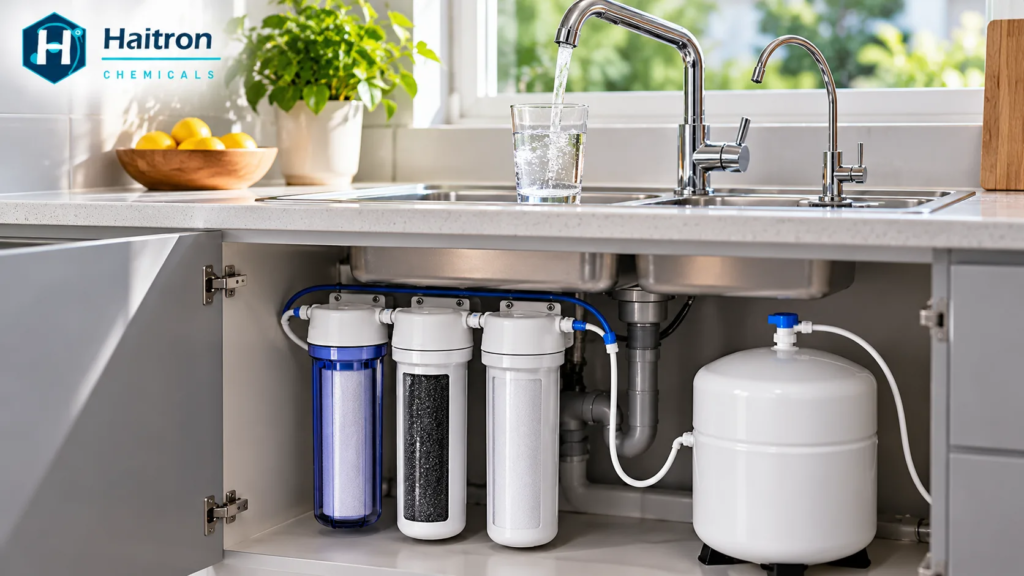
A lead filter for water is a drinking water filter tested and certified to cut lead to a safe low level, usually under NSF/ANSI Standard 53 or, for reverse osmosis, NSF/ANSI 58. The right one sits at the tap you drink from. Always check the box for a specific lead reduction claim, not just “NSF certified”.
That last detail trips up a lot of buyers. Plenty of filters carry an NSF mark for chlorine or taste but do nothing for lead.
Why Is Lead in Tap Water a Concern?
Lead harms the brain and nervous system, and children are most at risk. The US EPA’s health goal for lead in drinking water is zero, because no safe level is known. Lead usually doesn’t come from the treatment plant. It enters water from lead service lines, lead solder and brass fittings inside older homes.
Here’s a simple way to picture it. Clean water leaves the plant, then picks up lead the way tea picks up flavor from a tea bag, on the trip through old pipes.
A few quick facts:
- Illinois health and environmental agencies say a lead service line, when present, is usually the biggest source of lead in tap water.
- Lead solder was common in copper plumbing until the 1986 federal ban, so homes built before then carry higher risk.
- Boiling doesn’t remove lead. It can actually concentrate it as water evaporates.
- Hot water pulls more lead from pipes, so use cold water for drinking and cooking.
Do Water Filters Remove Lead?
Yes, but only filters tested for it. To earn a lead reduction claim under NSF/ANSI 53 or 58, a filter must take water containing 150 ppb of lead down to 5 ppb or less. Many common filters aren’t certified for lead at all, so the specific claim on the label is what matters.
NSF tightened that pass mark from 10 ppb to 5 ppb in 2020, matching Health Canada’s 2019 limit. Certification isn’t a one time event either. NSF retests certified products and audits factories every year.
Lead also comes in two forms. Dissolved lead is like sugar stirred into tea. Particulate lead is like tiny flakes of rust. NSF has required lead claims to cover particulate lead as well as dissolved lead since 2007.
What Types of Lead Water Filters Are There?
Lead water filters come as pitchers, faucet mounts, under sink cartridges, refrigerator filters and reverse osmosis systems. All of them can work if they’re certified for lead. They differ in cost, flow, capacity and convenience. Whole house filters are a different story, because they sit before the pipes that usually add the lead.
| Filter type | Certification to look for | Flow and capacity | Best for | Watch out for |
|---|---|---|---|---|
| Pitcher | NSF/ANSI 53 with lead claim | Slow, small batches | Renters, low budgets | Short cartridge life |
| Faucet mount | NSF/ANSI 53 with lead claim | Good, at one tap | Quick kitchen setup | Doesn’t fit every faucet |
| Under sink cartridge | NSF/ANSI 53 with lead claim | Good, dedicated tap | Families, daily cooking | Needs installation |
| Reverse osmosis | NSF/ANSI 58 with lead claim | Slower, storage tank | Several contaminants at once | Wastes some water, removes minerals |
| Whole house filter | Rarely certified for lead | High, all taps | Sediment, chlorine | Misses lead added by home plumbing |
Many lead reduction cartridges combine carbon with ion exchange media or other lead adsorbing materials. The certification tells you the combination actually works.
Which Lead Filter for Water Should You Choose?
Pick a point of use water filter certified to NSF/ANSI 53 for lead, or an RO system certified to NSF/ANSI 58 for lead. EPA’s consumer guide also suggests choosing one certified to NSF/ANSI 42 for Class I particulate reduction. Then match the type to your budget and how much water you drink and cook with.
How to check a filter in under a minute:
- Find the certification mark from NSF, IAPMO, UL, WQA or CSA.
- Look for “NSF/ANSI 53” or “58” next to the words “lead reduction”.
- Check that the replacement cartridge carries the same claim.
- Confirm the rated gallon capacity, so you know when to change it.
Why Isn’t a Whole House Filter Best for Lead?
A whole house system treats water where it enters the home. Lead often enters later, from interior pipes, solder and brass faucets. So water can be filtered at the meter and pick lead up again before it reaches your glass. Health agencies prefer point of use filters at the taps you drink from.
Virginia Tech professor Marc Edwards warned Flint residents in 2016 that whole house filters could give a false sense of security for this exact reason. EPA’s Flint guidance made the same point.
What Common Mistakes Should You Avoid?
The most common mistakes are buying a filter without a lead claim, keeping cartridges past their rated life, and filtering hot water. Each one can let lead reach your glass while you think you’re protected. Reading the label, tracking gallons and using cold water fixes nearly all of them.
- Trusting “NSF certified” without checking the lead reduction claim.
- Running the cartridge past its rated gallons.
- Using hot water for drinking, cooking or baby formula.
- Boiling water to remove lead.
- Forgetting the faucet aerator. Small lead particles can collect in that screen, so clean it regularly.
- Treating any lead filter for water as a permanent fix when the lead pipe is still there.
What Are the Limits of a Lead Filter?
A filter reduces exposure but doesn’t remove the source. Certification testing uses 150 ppb lead, and real homes can be far higher. NSF reported some Newark taps from lead service lines appeared to exceed 1,500 ppb, ten times the test water. Filters also clog faster after pipe work disturbs lead scale.
That’s why Illinois agencies describe point of use filters as an interim step until lead service lines and plumbing are replaced. EPA’s 2024 Lead and Copper Rule Improvements require most water systems to replace lead service lines within ten years and lower the lead action level from 15 to 10 ppb.
After a lead line is replaced, flush your plumbing. Illinois guidance recommends 30 minutes with faucet aerators removed.
How Is Lead Removed in Industrial Water Treatment?
Factories, mines and treatment plants face lead in process water and wastewater at much larger volumes. There, selective chelating resin grabs heavy metals like lead while letting harmless ions pass. Think of it as a magnet tuned to specific metals.
These systems are engineered for industrial flows, not kitchen taps. If you’re designing one, you can compare our ion exchange resins by family, or talk to our technical team about your water analysis.
Conclusion
Lead in water is a plumbing problem first, which is why the fix starts at the tap. A certified filter cuts exposure right away, while pipe replacement removes the source for good.
Your next step: test your water, check your service line material with your utility, and install a lead filter for water certified to NSF/ANSI 53 or 58 for lead at every tap you drink and cook from.
FAQs
Does reverse osmosis remove lead?
Yes, RO is very effective at reducing lead. Choose a system certified to NSF/ANSI 58 with a lead reduction claim.
Can I shower in water that contains lead?
Lead isn’t absorbed well through skin, so bathing is generally considered safe. The main risk is drinking and cooking with it.
Should I use filtered water for baby formula?
Yes, if you’re concerned about lead. Use cold water through a lead certified filter, then prepare formula as directed.
How do I know if my home has a lead service line?
Ask your water utility. Many now keep service line inventories, and homes built before 1986 deserve a closer look.
Does Haitron make filters for home lead removal?
No. Haitron manufactures ion exchange resins, including chelating resin for industrial heavy metal removal. For industrial projects, you can request a quote through the contact page.