What Is Cation Exchange Resin?
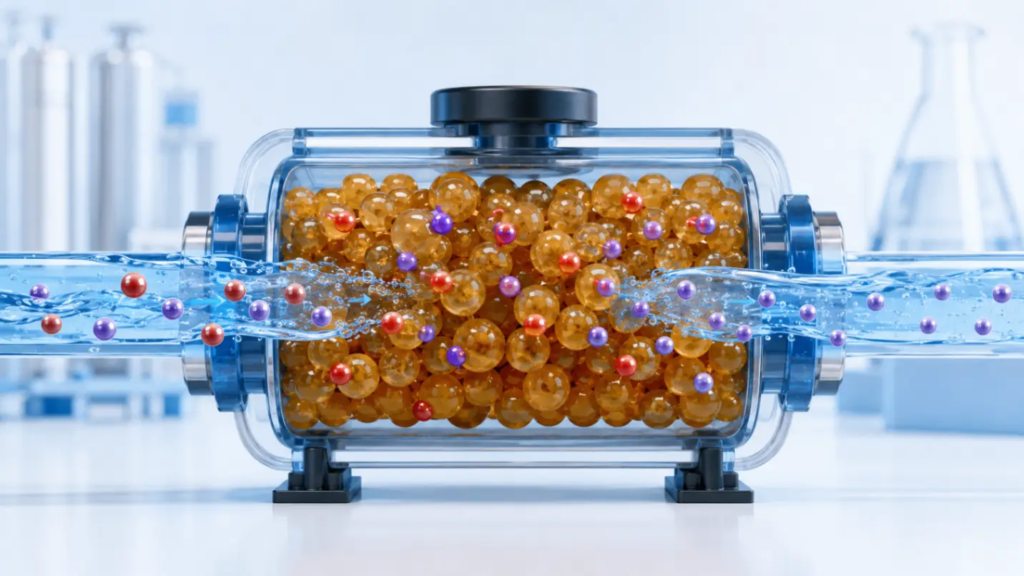
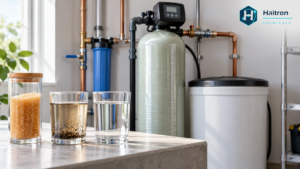
Cation exchange resin is a man-made material made up of tiny beads. Its job is simple: pull positively charged ions out of water. That means calcium, magnesium, and iron, the minerals responsible for hard water. Once the resin grabs these, it releases a friendlier ion in return, usually sodium or hydrogen. This is the same water softener resin sitting quietly inside home softening units and countless industrial treatment systems.
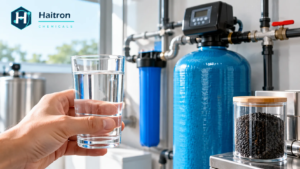
You’ve probably heard your softener kick on late at night. That humming sound means it’s regenerating. It’s simply the resin doing its job. Open up the tank and you’ll find small yellow or brown beads. Each one is packed with millions of tiny exchange sites. As water flows through, those sites grab onto hardness minerals. In exchange, they release sodium or hydrogen ions.
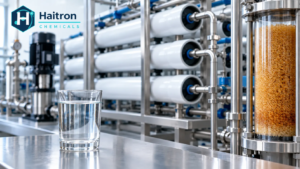
That basic swap, trading troublesome minerals for a harmless ion, is what makes water softening possible. It’s the same idea behind industrial demineralization. You’ll also find it in several specialized treatment processes, used everywhere from homes to large industrial plants.
How Cation Exchange Resin Works
It all starts with polymerization, styrene gets combined with divinylbenzene, and out come these tiny, porous spherical beads. Each one then gets treated with a functional group that gives it its ionic charge. For strong acid cation (SAC) resin, that’s a sulfonic acid group. Weak acid cation (WAC) resin uses something different, a carboxylic acid group instead.
Here’s how the exchange process actually plays out, step by step:
- Water carrying dissolved hardness ions (Ca²⁺, Mg²⁺) flows into and through the resin bed.
- The resin’s exchange sites naturally prefer calcium and magnesium over sodium, so they grab onto these hardness ions as the water passes through.
- In return, sodium ions (or hydrogen ions, depending on what form the resin is in) get released back into the water.
- What comes out the other end is softened or treated water, while the resin itself keeps accumulating the hardness ions it’s pulled out.
- Eventually the resin’s exchange capacity gets used up, and it needs regenerating, a concentrated salt or acid solution washes through, strips off the captured ions, and reloads the resin with sodium or hydrogen again.
The whole thing works because it’s reversible. That’s the real advantage here, the resin isn’t some one-and-done filter media you throw away after a single pass. It can keep cycling through this capture-and-regenerate process for years.
Types of Cation Exchange Resin: SAC vs. WAC
Here’s the thing about cation exchange resins: they don’t all act the same, and once you’re treating actual water, that difference shows up quickly. You’ve basically got two main players, SAC and WAC, and they split apart on chemistry, how much capacity you get, and when you’d actually reach for one over the other.
Take SAC. It runs on sulfonic acid groups, which means pH barely matters to it. Don’t slow down. That’s basically why it’s become the go-to for softeners, whether you’re at home or running something commercial. It just strips hardness, no fuss.
WAC’s a different animal. It needs carboxylic acid groups and won’t do much unless there’s decent alkalinity in the water already. Pickier, sure, but it pays you back at regeneration time, less acid, less waste.
| Feature | SAC Resin | WAC Resin |
| Functional group | Sulfonic acid | Carboxylic acid |
| Works across full pH range | Yes | No,needs alkalinity present |
| Typical | General water softening | Dealkalization, high-alkalinity water |
| Regeneration efficiency | Lower | Higher |
| Regeneration chemical | Sodium chloride (brine) | Sulfuric or hydrochloric acid |
| Removes all hardness | Yes | Only alkalinity-associated hardness |
| Common setting | Residential/commercial softeners | Industrial demineralization, pre-treatment |
Myth vs. Fact
Myth: WAC resin is simply a “cheaper” version of SAC resin.
Fact: WAC resin isn’t cheaper or better, it’s chemically limited to alkalinity-linked hardness and won’t fully soften water on its own in low-alkalinity conditions.
Gel Type vs. Macroporous Cation Exchange Resin
Acid strength isn’t the only thing that sets one resin apart from another. The physical build of the beads counts just as much. Gel type resins have a smooth, glassy bead with a clear look, and they pack in plenty of exchange capacity. That makes them a natural pick for softening jobs where the incoming water starts out reasonably clean.
Macroporous resins go a different route. Their inner structure is open and spongy, threaded with permanent pores that give contaminants somewhere to settle instead of clogging the surface. That toughness helps them shrug off organic fouling and hold up against oxidants, so they tend to earn their place in harsher industrial feedwater, though you’ll pay a bit more for it.
Gel Type Resin
Pros
- Higher exchange capacity per bead
- Lower cost and easy to source
- Great fit for clean feedwater
Cons
- Prone to fouling over time
- Weaker against oxidative damage
Macroporous Resin
Pros
- Strong resistance to organic fouling
- Holds up well to chemical attack
- Longer service life in tough water
Cons
- Higher price at the outset
- Slightly lower raw capacity
Common Applications of Cation Exchange Resin
Cation exchange resin shows up in far more places than home water softeners. Once you start looking, it turns up across homes, factories, labs, and power plants, quietly doing the same basic job in a lot of different settings.
- Home Softening: Cuts the scale that clogs household pipes and appliances.
- Boiler Feedwater: Stops buildup that saps efficiency and wears out boilers.
- Lab Purification: Makes the high purity water that pharma and research need.
- Power Generation: Cleans condensate so turbines and steam lines stay safe.
- Beverage Processing: Holds mineral levels steady across food and drink lines.
- Metal Finishing: Delivers ultra pure water for rinsing and electronics work.
- Contaminant Removal: Traps regulated traces like barium and radium in water.
How to Choose the Right Cation Exchange Resin
Picking a resin isn’t a one size fits all decision. Here’s a simple framework you can actually work through.
- Test the Water: Check hardness, alkalinity, iron, and manganese before you buy.
- Match the Resin: Plain softening wants SAC; high alkalinity likes a WAC blend.
- Weigh the Fouling: Organics, chlorine, or oxidants call for a macroporous bead.
- Size the Capacity: Heavier daily use needs more capacity and a larger bed.
- Check the Standard: For drinking water, confirm the resin meets NSF/ANSI 61.
Here’s a quick sense of who each type actually suits.
- SAC Fits Homes: Best for homeowners and facilities wanting clean, full hardness removal.
- WAC Fits Industry: Best for high alkalinity feedwater and lower regeneration chemical costs.
- Pros Fit Trouble: Best when feedwater runs complex, variable, or contaminated, so an engineer sizes it.
Regenerating Cation Exchange Resin
Regeneration is basically how you bring exhausted resin back to working condition, it reverses the exchange reaction that took place during softening.
For SAC resin: A concentrated sodium chloride brine solution, usually in the 8 to 12% range, is passed through the bed. This pushes the captured hardness ions off the resin and replaces them with sodium.
For WAC resin: A dilute acid, typically sulfuric or hydrochloric, strips away the captured ions and brings the resin back to its hydrogen form.
Step-by-step regeneration cycle (typical for a residential softener):
- Backwash: the tank runs water backward for a bit, loosening the resin bed and carrying off whatever debris has piled up.
- Brine draw: this is when the concentrated salt solution gets drawn through the resin.
- Slow rinse: the brine takes its time moving through the bed, which lets it do its job the way it’s supposed to.
- Fast rinse: whatever brine’s left gets pushed out, and the bed is ready to go again.
- Refill: last up, the brine tank fills itself back up for the next round.
It’s a bit of a balancing act. Regenerate too often and you’re wasting salt and water for nothing. Leave it too long between cycles, though, and hard water starts slipping past the system. That’s basically why most modern softeners don’t bother with fixed timers anymore, they run on metered regeneration, so a cycle only kicks off once actual water use calls for it.
Resin Lifespan, Fouling, and Troubleshooting
Under normal use, decent cation exchange resin will usually run somewhere around 10 to 15 years before it’s more worth replacing than continuing to regenerate it. That said, this can shift quite a bit depending on water quality, how much the system gets used, and how well it’s been looked after.
Common Mistakes
- Iron and manganese in the feedwater tend to get overlooked, but they’ll foul the resin and cut its life short.
- Using the wrong salt matters too, non-purified salt can leave insoluble sediment sitting in the resin bed.
- A lot of people skip capacity testing along the way, so performance quietly declines until the water quality is obviously off.
- Mixing different resin types in one vessel without proper engineering guidance is another common slip-up.
Troubleshooting Signs of Failing Resin
- Hard water symptoms coming back not long after a regeneration cycle
- Resin beads that look cracked, discolored, or noticeably smaller in volume
- Salt usage creeping up without the water quality actually getting any better
- Flow rate through the resin bed starting to slow down
Best Practices
- Pre-filter for sediment, iron, and chlorine if the feedwater quality calls for it.
- Stick to the manufacturer’s recommended regeneration schedule and salt dosage.
- Test the output water hardness now and then to catch capacity loss before it becomes a bigger problem.
- Keep the brine tank clean and stick with resin-safe, purified salt.
Cation Exchange Resin vs. Alternative Softening Methods
Cation exchange resin isn’t the only option out there for dealing with hard water or producing purified water, and it’s worth taking a look at how it stacks up against the alternatives.
| Method | How It Works | Best For | Limitation |
| Cation exchange resin | Swaps hardness ions for sodium/hydrogen | General softening, industrial demineralization | Requires regeneration chemicals and wastewater discharge |
| Reverse osmosis | Forces water through a semi-permeable membrane | High-purity water, removing dissolved solids broadly | Higher water waste, doesn’t target hardness specifically without pre-treatment |
| Zeolite softening | Natural mineral with similar ion exchange properties | Basic softening, lower-cost setups | Lower capacity than synthetic resin, less consistent |
| Electrodeionization (EDI) | Uses electrical current with ion exchange membranes | Continuous high-purity water production | Higher equipment cost, needs pre-treated feedwater |
| Lime softening | Chemical precipitation of hardness minerals | Large-scale municipal treatment | Not practical for residential or small commercial use |
Buying Considerations and Industry Standards
When you’re sourcing cation exchange resin for commercial or industrial use, price is really just one piece of the puzzle, there’s more to weigh.
- Certification: If the resin will be touching drinking water at any point, double check it’s certified to whatever regional drinking water contact standard applies. In the U.S., that’s typically NSF/ANSI/CAN 61.
- Exchange capacity rating: You’ll see this expressed in kilograins or equivalents per cubic foot (or per liter). It basically tells you how much water the resin can handle before it needs to go through regeneration again.
- Crosslinking percentage: Standard SAC resin usually runs around 8% crosslinking, and going higher tends to boost physical durability, though it can come at the cost of slightly slower exchange kinetics.
- Manufacturer reputation and documentation: A supplier worth trusting will have technical data sheets ready, covering capacity, particle size distribution, and how to regenerate the resin properly. Ask for these before buying in bulk.
- Application fit: Double check the resin is actually rated for your specific use case, drinking water, industrial process water, or something more specialized like pharmaceutical grade purification. Certification and quality standards aren’t one size fits all across these applications.
Future Trends in Cation Exchange Resin Technology
Manufacturers aren’t slowing down when it comes to making resin more selective and efficient. There’s a real push toward resins designed for newer challenges, like helping with PFAS pre-treatment or recovering lithium from brine, plus regeneration chemistries that aim to cut down on wastewater discharge. With water scarcity becoming more of an issue and discharge regulations getting stricter, the industry is clearly heading toward more sustainable treatment approaches. That said, don’t expect ion exchange technology to get pushed aside anytime soon, it’s still one of the most cost-effective and well understood options in water treatment, so the innovation is happening within it rather than around it.
FAQ
What’s the difference between cation and anion exchange resin?
Cation exchange resin removes positively charged ions like calcium and magnesium, while anion exchange resin deals with negatively charged ones such as chloride, sulfate, and nitrate. Many demineralization systems actually run both together, one after the other.
How often should cation exchange resin be replaced?
Under normal conditions, good quality resin usually holds up somewhere between 10 and 15 years, but heavy fouling, high usage, or poor water quality can shorten that quite a bit. Capacity testing tends to be the most reliable way to figure out when it’s actually time for a replacement.
Is cation exchange resin safe for drinking water?
Yes, as long as it’s certified to whatever drinking water contact standard applies in your region (in the U.S., that’s NSF/ANSI/CAN 61) and it’s kept properly maintained.
Can cation exchange resin be regenerated at home?
Residential water softeners take care of this automatically using salt (sodium chloride) brine, so homeowners really just need to keep the brine tank stocked up. Nothing more hands-on is usually required.
What chemicals regenerate cation exchange resin?
SAC resin gets regenerated using a sodium chloride brine solution, while WAC resin needs a dilute acid instead, typically sulfuric or hydrochloric.
Why does cation exchange resin turn brown or discolored over time?
That kind of discoloration usually points to iron fouling, oxidative damage, or organic buildup happening inside the resin. Each of these chips away at exchange capacity over time, so it’s often a sign the resin could use cleaning or, eventually, replacement.
How long does cation exchange resin last?
In a typical residential setup, somewhere around 10 to 15 years is normal. Industrial settings dealing with tougher feedwater, though, might see that lifespan drop if there isn’t proper pre-treatment in place.
Which is better, SAC or WAC resin?
It really depends on the situation, neither one is better across the board. SAC resin remains the standard choice for complete, reliable hardness removal, while WAC resin tends to perform more efficiently in high-alkalinity water and uses less regeneration chemicals overall.
Does cation exchange resin remove all contaminants from water?
Not quite, it’s built with a narrow job in mind: pulling cations out of the water. If you’re also trying to deal with anions, organics, or particulates, you’d need to bring in other treatment steps too, like anion exchange, filtration, or reverse osmosis, alongside it.
Final Thoughts
At its core, cation exchange resin does one job: trading unwanted positive ions for sodium or hydrogen. But that one job shows up in an enormous range of settings, everywhere from a single home softener to full industrial boiler feedwater systems. Getting a handle on the difference between SAC and WAC resin, understanding how regeneration actually works, and catching the early signs of fouling can save you a lot of money and water quality headaches down the road.
If you’re picking out resin for a brand new system, start by actually testing your water chemistry instead of guessing at it. And if you’re maintaining a system that’s already up and running, a periodic capacity check will tell you a lot more than just waiting around for hard water symptoms to show up again. If your situation involves industrial-scale demineralization, high-alkalinity feedwater, or drinking water compliance, it’s genuinely worth talking to a water treatment engineer before locking in your resin choice, fixing the wrong decision after installation tends to cost a lot more than getting it right from the start.