Boiler Water Treatment: The Complete Guide to Preventing Scale, Corrosion, and Downtime
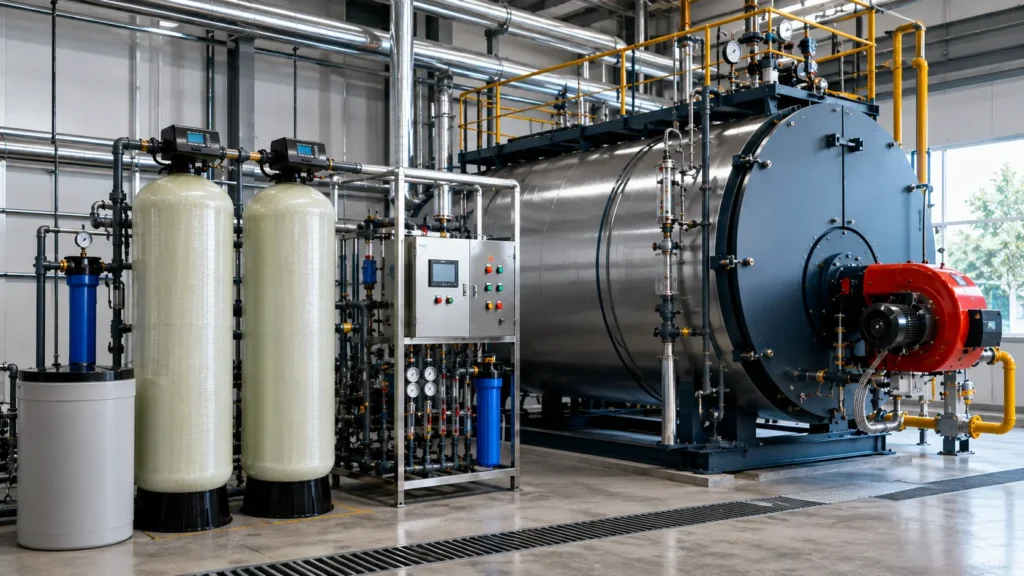
Boiler water treatment is how you condition feedwater and boiler water so scale, corrosion, and carryover don’t build up inside the boiler. Skip it, and the minerals and gases already sitting in raw water start eating away at the boiler from the inside. Efficiency drops, and the equipment can wear out in months instead of years.
it comes down to three things. Pretreatment softens or demineralizes the water so hardness and dissolved solids are gone before it reaches the boiler. Internal chemical treatment keeps the pH steady and uses oxygen scavengers plus scale and corrosion inhibitors to protect things from within. Blowdown management clears out concentrated solids so they don’t pile up over time. Miss any one of these, and the whole system is left exposed.
Why Untreated Boiler Water Causes Problems
Raw water, whether it’s from a municipal supply, a well, or a river, carries calcium, magnesium, silica, dissolved oxygen, and other impurities. Once inside a boiler, heat and pressure turn these into three main failure modes:
- Scale formation: Calcium and magnesium precipitate out as heat is applied, building a hard mineral layer on tube surfaces. Even a thin layer insulates the tubes, forcing the burner to work harder, and thick scales can lead to overheating and tube failure.
- Corrosion: Dissolved oxygen and low pH eat away at steel surfaces, pitting tubes and drums. It’s often the real cause behind unplanned boiler tube failures in industrial plants.
- Carryover: High dissolved solids or foaming let liquid droplets and solids ride along with the steam, fouling turbines, valves, and heat exchangers downstream.
Together, these problems drive up fuel costs and outages, which is why treatment matters for any steam or hot water boiler.
How Boiler Water Treatment Works
Boiler water treatment generally breaks down into three stages that build on one another.
-
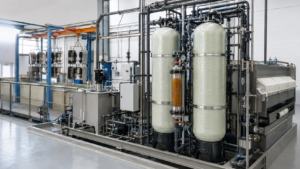
External (Pretreatment)
This step happens before water ever enters the boiler, and it’s where most of the impurity load gets removed:
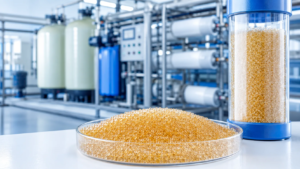
- Softening: Sodium cycle ion exchange resin swaps out calcium and magnesium ions for sodium, getting rid of the hardness that causes scale. This is the standard pretreatment for low and medium pressure boilers.
- Dealkalization: Weak acid cation (WAC) resin removes hardness tied to alkalinity, reducing the carbon dioxide load on the boiler and cutting down on the regenerant chemicals needed compared to straight softening.
- Demineralization (deionization): Strong acid cation (SAC) and strong base anion (SBA) resins strip out nearly all dissolved minerals, including silica, producing the low conductivity feedwater that high pressure and utility boilers require.
- Reverse osmosis and filtration: Often used ahead of ion exchange to reduce the mineral and suspended solids load, which extends resin life between regenerations.
-
Internal (Chemical) Treatment
Even water that’s been well pretreated still needs conditioning once it’s inside the boiler:
- Oxygen scavengers (such as sulfite or amine based products) remove the residual dissolved oxygen that pretreatment and deaeration don’t fully catch.
- pH and alkalinity control keeps the boiler water in the range where corrosion rates stay minimal and phosphate or chelant programs can do their job properly.
- Scale and sludge conditioners (phosphates, polymers, chelants) keep any leftover hardness in a dispersed, non adherent form so it exits with blowdown rather than settling on tube walls.
- Amines and filming inhibitors protect the condensate return system from carbonic acid corrosion.
-
Blowdown Control
Blowdown removes a controlled portion of boiler water to keep dissolved and suspended solids under the level where scale, foaming, or carryover become a real risk. The blowdown rate is typically set by monitoring conductivity, TDS, or specific markers like silica and alkalinity against the boiler’s operating pressure, since higher pressure boilers carry tighter limits as scale and carryover risks climb sharply with pressure. This is what makes boiler water treatment a layered process rather than a single fix.
Boiler Water Quality Limits by Pressure
The American Boiler Manufacturers Association, or ABMA, puts out reference limits that are widely used for boiler water at different drum pressures. As the pressure goes up, the allowable levels of TDS, alkalinity, and silica all drop quite a bit, since higher pressure makes solids more likely to carry over into the steam.
| Drum Pressure (psig) | Max Total Alkalinity (ppm CaCO₃) | Max Silica (ppm SiO₂) | Approx. Max Conductance (µmhos/cm) |
| 0–300 | 700 | 150 | 7,000 |
| 301–450 | 600 | 90 | 6,000 |
| 451–600 | 500 | 40 | 5,000 |
| 601–750 | 400 | 30 | 4,000 |
| 751–900 | 300 | 20 | 3,000 |
| 1,001–1,500 | ~0 | 2 | 150 |
The values listed here are a condensed version of standard ABMA data. Because requirements fluctuate based on specific boiler engineering, the quality of your raw water, and your chemical program, you should always verify these targets with your equipment manufacturer or a treatment professional. Generally, once operating pressures exceed 900 to 1,000 psig, simple softening is no longer sufficient, and full demineralization becomes a necessity for feedwater.
Pretreatment Method by Boiler Type
| Boiler Type / Pressure | Typical Pretreatment | Why |
| Low-pressure commercial (under ~150 psig) | Sodium-cycle softening | Removes hardness cheaply; blowdown handles remaining TDS |
| Mid-pressure industrial (150–600 psig) | Softening + dealkalization, or partial demineralization | Reduces alkalinity and CO₂ carryover into condensate |
| High-pressure industrial (600–1,500 psig) | Full demineralization (SAC + SBA, or mixed bed) | Silica and TDS limits are too tight for softened water alone |
| Utility / high-purity steam | Demineralization + mixed bed polishing | Near-zero conductivity required for turbine protection |
Common Mistakes in Boiler Water Treatment
- Treating only the boiler, not the makeup water. Dosing chemicals in without controlling hardness overloads the program and burns through resin fast. Pretreatment comes first.
- Ignoring condensate return quality. Contaminated or oxygen laden condensate drags the same old problems right back in. It’s an often overlooked cause of feedwater failure.
- Under blowing or over blowing. Too little lets solids build up, too much wastes water and chemicals. Go by test data, not a fixed schedule.
- Letting resin degrade unmonitored. Iron, organics, or chlorine foul it over time, and quality slips before anyone catches it. Check it regularly.
- Skipping regular water testing. pH, TDS, hardness, alkalinity, and silica need routine checks, since good boiler water treatment means catching problems early, not after the damage is done.
Choosing an Approach: Practical Steps
- Identify your boiler’s operating pressure and manufacturer limits. This sets the feedwater and boiler water quality targets you need to hit.
- Test the raw water source. Hardness, TDS, silica, iron, and alkalinity tell you which pretreatment train actually makes sense.
- Select pretreatment. Softening works for low pressure systems, while dealkalization or demineralization comes in as pressure and purity needs go up.
- Design the internal chemical program. Match your oxygen scavenger, pH control, and scale inhibitor chemistry to the pretreatment you picked, since a demineralized water boiler needs a different internal program than one running on softened water.
- Set blowdown control based on test data, and automate it with conductivity controllers if the boiler size makes that worth it.
- Build a testing and resin or chemical maintenance schedule, and go back and adjust it whenever the water source, boiler load, or fuel changes, because good boiler water treatment isn’t something you set once and forget.
Frequently Asked Questions
What is the main purpose of boiler water treatment?
It stops scale, corrosion, and carryover by keeping impurities in check, protecting efficiency and tube life.
Can I use ordinary tap water in a boiler without treatment?
Not really, unless it’s a very small, low pressure unit. Even tap water has enough hardness and solids to cause trouble over time, and higher pressure means even less room for error.
What’s the difference between softening and demineralization?
Softening swaps calcium and magnesium for sodium but leaves TDS mostly the same. Demineralization strips out nearly all dissolved ions, giving the low conductivity water that higher pressure boilers need.
How often should boiler water be tested?
Depends on pressure and how critical the system is. Low pressure setups often test daily, while higher pressure boilers usually run continuous monitoring.
How much does boiler water treatment cost?
It varies a lot by boiler size, pressure, and method used. Best to get a quote specific to your system instead of guessing.
Does boiler water treatment prevent all boiler failures?
Not entirely, mechanical and operational issues still play a role, but a good program handles most of the water chemistry problems.
Water quality needs shift by boiler design and pressure, so always check your targets with your OEM before locking in your boiler water treatment program.