Non Electric Water Softener: How It Works and Who Should Buy One
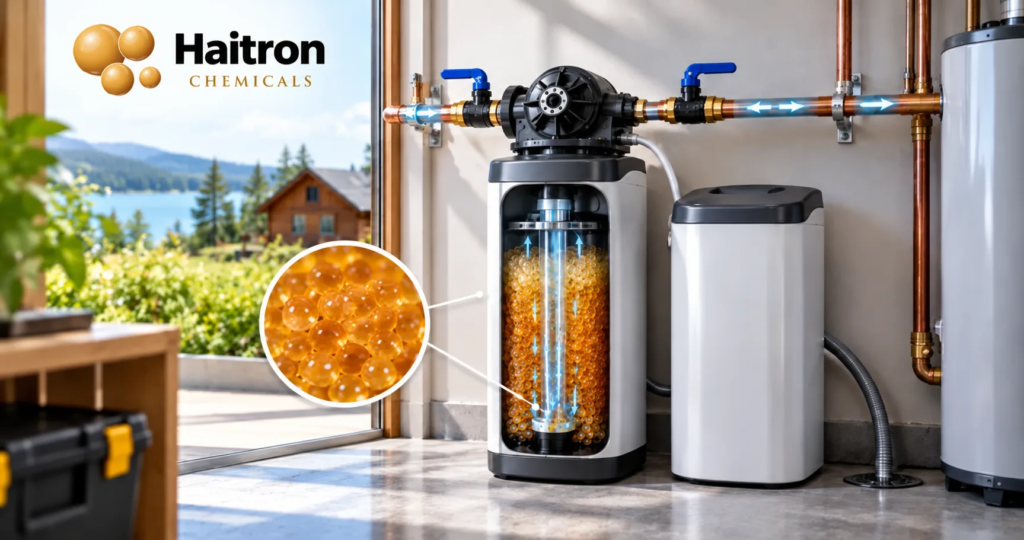
A non electric water softener removes or controls hard water minerals without plugging into an outlet. Most true models use the force of moving water to run a mechanical meter and valve, which triggers the salt rinse that recharges the resin. Salt free conditioners also run without power, but they don’t actually soften water.
That difference matters. This guide explains both types, compares them with electric water softener systems, and helps you pick the right one for your home.
What Is a Non Electric Water Softener?
A non-electric water softener is a salt based ion exchange unit that runs on water pressure instead of electricity. A small turbine and meter count the water you use. When the resin is nearly full of hardness minerals, the valve starts regeneration on its own. There’s no timer, no screen and no plug.
Kinetico is the best known brand. Its product literature says moving water powers its systems, with no timers or computers to set or repair. Other makers sell single tank non electric units too. Scalemaster’s Softline 150, for example, is a single cylinder model rated for homes of up to 5 people.
How Does a Water Powered Softener Work?
Think of the turbine like a pinwheel in the wind. Every gallon that flows through spins it, and the spins add up like a car’s odometer. At a set number of gallons, gears switch the valve into regeneration.
Inside the tank, resin beads do the real work. Most residential water softener resin is strong acid cation resin. The beads trade calcium and magnesium for sodium, just like an electric unit.
Many non-electric models use two tanks. Kinetico says one tank always stays in service while the other regenerates. That means you never get a burst of hard water during a recharge.
Is a Salt Free Conditioner the Same as a Non Electric Softener?
No. A salt free water conditioner needs no power and no salt, but it doesn’t remove hardness. Most use template assisted crystallization (TAC). TAC turns dissolved minerals into tiny crystals that are less likely to stick as scale. Your water stays hard on a test strip.
Here’s an everyday example. Sugar dissolved in tea vanishes. Sugar crystals at the bottom just sit there. TAC aims to make hardness behave more like those loose crystals, so they don’t glue themselves to your heater.
There’s real data on this. Watts summarized a study by Arizona State University and the WateReuse Foundation that found TAC reduced scale formation by more than 88%. Magnetic water treatment cut the scale by only about 50% in the same study.
Electric vs Non Electric vs Salt Free: How Do They Compare?
| Feature | Electric salt softener | Non electric salt softener | Salt free TAC conditioner |
|---|---|---|---|
| Needs power | Yes | No | No |
| Removes hardness | Yes | Yes | No, it changes how minerals behave |
| Uses salt | Yes | Yes | No |
| Needs a drain | Yes | Yes | Usually no |
| Regeneration trigger | Timer or electronic meter | Mechanical water meter | None |
| Works in a power cut | Softens, but may not regenerate | Yes | Yes |
| Slippery soft water feel | Yes | Yes | No |
| Best for | Most homes, very hard water | Off grid homes, outage prone areas | Scale control where brine discharge is limited |
The key point is simple. If you want water that tests soft, you need ion exchange. Whether it’s electric or non electric is a separate choice.
Who Should Choose a Non Electric Water Softener?
A non-electric water softener makes the most sense when power is unreliable or unavailable. Good fits include:
- Off grid cabins and homes on solar
- Rural homes on wells where outages are common
- Utility rooms with no outlet nearby
- Households that want fewer electronic parts to fail
If none of these apply, a high efficiency electric softener with a metered valve can perform just as well. Choose based on your hardness, your space and the dealer support near you.
How Hard Does Your Water Need to Be?
Test first. The USGS calls water hard at 121 to 180 mg/L as calcium carbonate, and very hard above 180 mg/L. One grain per gallon (gpg) equals about 17.1 mg/L.
Below about 60 mg/L, you likely don’t need softening at all. In the hard and very hard ranges, a salt based residential water softener gives the most reliable result.
Common Mistakes to Avoid
These are the errors that lead to disappointment:
- Buying a salt free unit and expecting a test strip to show soft water.
- Assuming “non electric” means “no drain.” Salt based units still need a drain line for the brine rinse.
- Ignoring water pressure. A water powered valve needs steady pressure to work properly.
- Skipping an iron test on well water. Iron can foul resin and TAC media alike.
- Treating a softener as a filter. It won’t remove lead. A certified lead filter for water handles that.
What Are the Limitations of Non Electric Systems?
A non-electric water softener still needs salt, a drain and regular checks. Fewer brands make them, so parts and service may come mainly from dealers. Settings are mechanical, which means less fine tuning than a digital valve offers.
Salt free conditioners have their own limits. They don’t lower hardness, don’t remove iron, and won’t fix chlorine taste. For chlorine taste and odor, pair your system with a GAC water filter.
Final Thoughts
Test your water hardness first, then decide what you really need. Choose water that tests soft, or only scale control. If you want true soft water without a plug, a non electric water softener with good resin is the most dependable choice.
Your next step is to get a hardness test and check your water pressure before you buy. Curious how ion exchange works at a bigger scale? Explore our water treatment applications.
FAQs
Can I use potassium chloride instead of salt?
Yes, most salt based softeners can regenerate with potassium chloride instead of sodium chloride. It costs more per bag, so check your manual for the right setting.
Does a non-electric unit work on well water?
Yes, it softens well water the same way. Test for iron, manganese and sediment first, because they can foul the resin. Install the unit after the pressure tank.
Are magnetic descalers a form of non-electric softener?
Not really. They don’t remove hardness, and many electronic versions plug in. In the Arizona State University study, magnetic treatment reduced scale far less than TAC did.
Can I install one outdoors?
Only with protection. Freezing can crack tanks and valves, and direct sun can damage plastic parts. Use an insulated enclosure, or install the unit indoors where possible.
Does Haitron supply resin for home water softeners?
Yes. Haitron manufactures strong acid cation resin used in water softening, along with other ion exchange resins. You can request a quote through the contact page.