Water Softener Maintenance: The Complete Schedule and Step-by-Step Guide
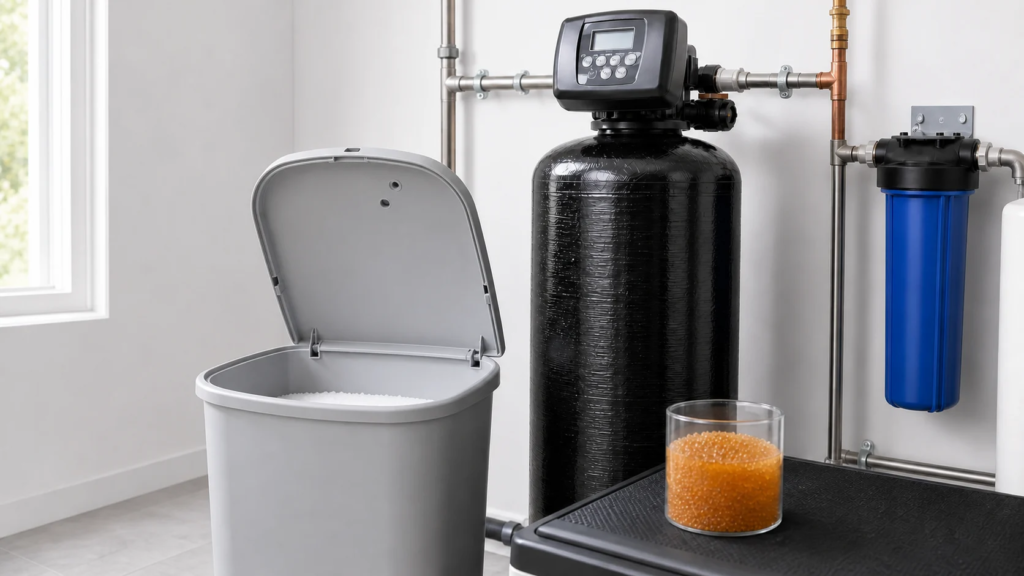
Staying on top of water softener maintenance really comes down to three simple habits. Your unit needs salt, a clean brine tank, and a resin bed that hasn’t been fouled or worn out. Check the salt level about once a month, give the brine tank a thorough clean once or twice a year, and take a look at the resin bed annually. Most softeners that seem to “stop working” aren’t actually broken. They’ve just fallen behind on one of these three basic tasks.
What Water Softener Maintenance Actually Involves
A water softener removes calcium and magnesium from your water using ion exchange resin, small beads that trade sodium (or potassium) ions for hardness minerals as water passes through the mineral tank. Over time, the resin bed regenerates using a brine solution from the brine tank, flushing out the minerals it has collected. Maintenance exists to keep every part of that cycle, meaning the salt supply, brine quality, resin condition, and the valve and injector that move water through the system, working the way it’s supposed to.
Neglecting any one part doesn’t cause a total failure right away. Instead, it causes a slow decline in softening performance that’s easy to miss until hard water spots and scale start showing up again.
Water Softener Maintenance Schedule
| Frequency | Task |
| Weekly | Visually check salt level in the brine tank |
| Monthly | Refill salt as needed; check for salt bridging or mushing |
| Every 2–3 months | Test water hardness at the tap |
| Annually | Clean the brine tank fully; inspect resin bed condition; clean the venturi/injector |
| Every 8–15 years | Replace resin bed (varies by water quality and usage) |
Check and Refill the Salt
Keep the brine tank at least one quarter to one third full, but don’t overfill it. Salt sitting in standing water for long stretches encourages bridging (a hard crust forming above the waterline) or mushing (salt breaking down into a thick sludge at the bottom). Both stop proper brine formation even when the tank still looks full. Break up any bridge with a broom handle or long tool, and if mushing has already happened, the tank will need a full clean-out.
Clean the Brine Tank
Once or twice a year, empty the tank completely, clear out any leftover salt sludge, and scrub the inside with warm water and mild soap. Only refill it with fresh salt once it’s fully dry, since leftover moisture speeds up the next bridging cycle.
Inspect and Clean the Resin Bed
The resin bed is the part most guides skip over, yet it’s central to good water softener maintenance. Resin can get fouled by iron, sediment, or chlorine and chloramine in the incoming water, which coats the beads and blocks ion exchange even though the resin itself isn’t “used up.” A resin cleaner made for iron or organic fouling, added according to the product instructions before a regeneration cycle, can bring performance back if the fouling is caught early. If cleaning stops restoring softening capacity, the resin has probably reached the end of its life rather than just being dirty.
Clean the Venturi/Injector and Bypass Valve
The venturi, or injector, pulls brine into the resin tank during regeneration. If it clogs with sediment, the system won’t regenerate properly even with full salt and clean resin. Most manufacturers recommend pulling out and rinsing this small plastic part once a year. Check the bypass valve at the same time to make sure it’s sealing correctly and isn’t stuck.
Test Your Water Hardness
A basic hardness test strip or drop-count kit every two to three months confirms the system is actually softening your water, rather than just trusting that “the salt looks fine.” A grains-per-gallon (GPG) reading that keeps climbing over several tests is usually the earliest reliable sign that a problem is developing.
When to Replace Water Softener Resin (vs. Just Cleaning)
Resin usually lasts 8 to 15 years, depending on water hardness, iron levels, chlorine exposure, and how often the system regenerates. Cleaning works when fouling is the cause. Replacement is needed when:
- Hardness stays high right after regeneration
- Beads look darkened, broken, or reduced in volume
- Cleaning no longer helps after a try or two
- The unit is well past 8 to 15 years with no resin ever replaced
Common Water Softener Problems and How to Fix Them
| Symptom | Likely Cause | Fix |
| Water is hard despite full salt | Salt bridging/mushing, fouled resin | Break up bridge; clean or replace resin |
| Water tastes salty | Brine valve stuck, incorrect regeneration settings | Check brine valve; reset regeneration cycle |
| Low water pressure | Clogged resin bed or fouled media | Inspect resin; backwash or clean |
| Softener won’t regenerate | Clogged venturi/injector, power/timer issue | Clean injector; check control valve settings |
| Excess salt use | Oversized regeneration settings, resin fouling | Adjust regeneration frequency; inspect resin |
DIY Maintenance vs. Calling a Professional
Salt refills, breaking up bridges, and cleaning the brine tank are all safe, low risk tasks you can handle yourself. Things get riskier with resin cleaning using chemical fouling agents, full resin bed replacement, and control valve repairs, since getting the resin volume wrong or mishandling chemicals can damage the mineral tank or permanently cut into softening efficiency. If hardness readings still aren’t improving after the basic cleaning steps, it makes sense to call in a certified water treatment professional instead of continuing to guess.
Maintenance Mistakes That Shorten a Softener’s Lifespan
- The brine tank sits empty way longer than it should
- Rock salt or other low quality salt gets used instead of the recommended kind
- Hardness numbers keep climbing for months, but nobody looks into why
- That yearly resin and injector check never actually happens
- A full salt tank gets mistaken for proof the whole system is fine
Frequently Asked Questions
How often should I add salt to my water softener?
Check it weekly and plan to refill about once a month on average, though this varies with how much water your household uses and how hard your water is.
How long does water softener resin last?
Usually 8 to 15 years, depending on water hardness, iron content, and chlorine exposure. Systems dealing with heavy fouling tend to fail sooner than that.
Can I clean water softener resin myself?
Basic resin cleaners added before a regeneration cycle are fine to do yourself. Full resin replacement or valve repair is better left to a professional.
Why is my water still hard even though the softener has salt?
The usual culprits are salt bridging (a hidden crust forming above the waterline) or resin fouling from iron, sediment, or chlorine, not simply running low on salt.
Should I use sodium chloride or potassium chloride?
Sodium chloride is cheaper and more widely used. Potassium chloride is a sodium free option some people choose for dietary reasons, though it usually costs more per regeneration cycle.
How much does water softener maintenance cost per year?
Routine costs mostly come down to salt, roughly $5 to $10 a bag with several bags needed annually, plus the occasional resin cleaner. Resin replacement is a bigger but infrequent cost that comes around every 8 to 15 years.
Conclusion
Good water softener maintenance really comes down to three habits. Keep the brine tank properly filled without letting salt bridge or turn to mush, clean both the tank and resin bed on a yearly schedule, and test your water hardness often enough to catch problems before they show up as scale or spots. Most performance issues trace back to fouled or worn out resin rather than an actual mechanical failure, which is exactly why resin condition, not just how much salt is in the tank, deserves a spot on your maintenance checklist.