Fine Mesh Resin: What It Is, Iron Removal and When to Use It
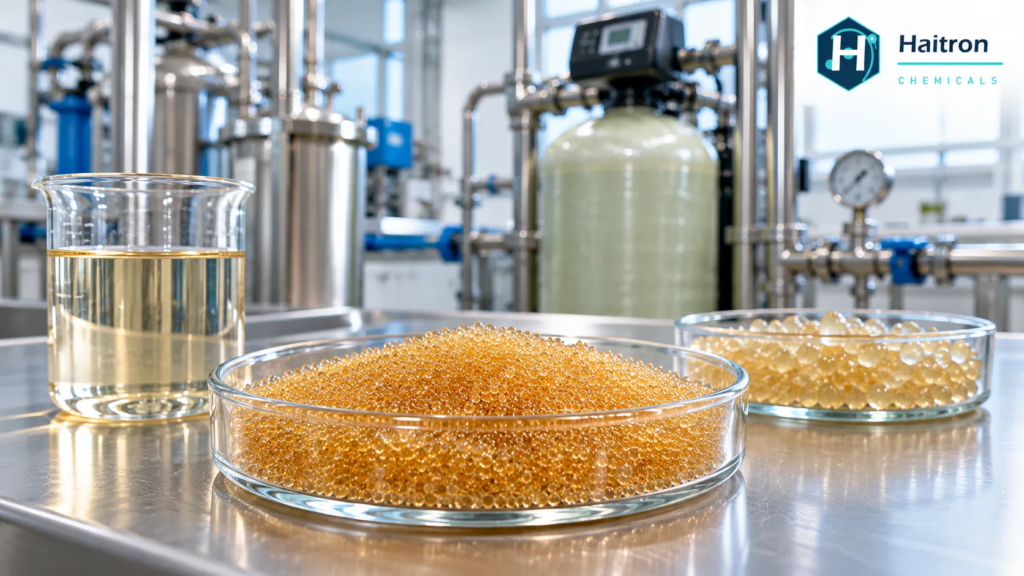
Fine mesh resin is water softener resin made of smaller beads, roughly 0.3 to 0.4 mm across, instead of the usual mix of larger sizes. Smaller beads swap ions faster and give a little more softening capacity. Sellers also promote them for removing dissolved iron from well water. The trade off is more care with backwash and flow.
Here’s what the bead size really changes, what it doesn’t, and how to decide.
What does “fine mesh” mean in a water softener?
“Mesh” is the number of openings per inch in a sieve, like a flour sifter. A higher number means smaller holes and smaller beads. Standard softener resin spans about 16 to 50 mesh, or 1.2 to 0.3 mm. Fine mesh grades sit at about 40 to 50 mesh, roughly 0.4 to 0.3 mm.
Those ranges come from Water Conditioning & Purification (WCP) magazine. A Canadian softener patent (CA2080298C) uses a similar split: 16 to 40 mesh counts as standard and 40 to 50 mesh as fine for home softeners.
Think of a jar of marbles versus a jar of peas. The peas pack tighter and expose more surface for water to touch. That’s why fine beads exchange ions faster.
Does fine mesh resin increase softening capacity?
A little. WCP says fine beads deliver roughly 10% more capacity than standard mesh resin. Many high efficiency home softeners use fine mesh for that reason. The same article notes the backwash flow for fine beads runs about 50% lower than for standard resin.
That last point matters more than most buyers realize. Backwash lifts and loosens the bed during regeneration. Fine beads are lighter, so the standard backwash rate can carry them straight out to the drain.
Is fine mesh resin good for iron removal?
It can help with dissolved iron, but it isn’t magic. Softener resin only removes ferrous iron, the clear kind dissolved in water. It doesn’t remove rusty particles or iron bacteria. Sellers rate fine mesh softeners for higher iron than standard units, but iron still fouls any resin over time.
Here’s a simple way to picture the difference:
- Ferrous iron is like sugar stirred into tea. It’s dissolved and invisible.
- Ferric iron is like sand in the tea. It’s rust you can see, and resin can’t remove it.
Iron ratings vary widely, and almost all come from sellers:
- Aquasure rates its Harmony Series fine mesh softeners for up to 10 ppm of iron.
- One Canadian dealer rates its standard resin Clack WS1 softener for only 1.5 ppm.
Purolite, a major resin maker, explains the catch. Strong acid cation resin grabs iron so tightly that brine can’t fully strip it off. Iron also speeds up chlorine damage. So even fine beads need regular resin cleaner on iron water.
Crosslink vs fine mesh resin: what’s the difference?
They describe different things. Crosslink is how strong each bead is, set by the share of a chemical called divinylbenzene (DVB), usually 8% or 10%. Mesh is how big each bead is. Crosslink mainly affects durability against chlorine. Mesh mainly affects exchange speed, capacity and iron handling. You can buy both together.
A familiar example: crosslink is how thick a rope is, and mesh is how many ropes you have. Thicker ropes last longer under strain. More thin ropes give you more grip.
Real products show both combinations exist. Franklin sells an 8% crosslinked fine mesh strong acid cation resin. Several sellers pair fine beads with 10% crosslink.
| Feature | Standard mesh, 8% crosslink | Fine mesh | 10% crosslink (standard mesh) |
|---|---|---|---|
| Bead size | About 1.2 to 0.3 mm (16 to 50 mesh) | About 0.4 to 0.3 mm (40 to 50 mesh) | Same as standard |
| Softening capacity | Baseline | About 10% higher (WCP) | Similar to baseline |
| Backwash flow | Standard | About 50% lower (WCP) | Standard |
| Pressure drop | Lower | Higher, since beads pack tighter | Similar to standard |
| Dissolved iron | Low levels | Sold for higher iron levels | Low levels |
| Chlorine resistance | Baseline | Set by its crosslink, not its size | Better (Purolite: more DVB, longer life) |
| Best fit | Most city and well water | Well water with dissolved iron | Chlorinated city water |
What about Aquasure and Clack WS1 fine mesh softeners?
Aquasure sells several Harmony Series softeners prefilled with fine mesh beads and rated for up to 10 ppm iron. Clack WS1 is a control valve, not a resin. Many WS1 systems ship with standard 8% resin, so a “fine mesh” WS1 package depends on the seller’s resin choice and backwash setup.
Two real examples:
- A ShopSavvy (2025) summary of buyer reviews of the Aquasure fine mesh resin softener reports hardness dropping from about 250 ppm to 25 ppm on water with about 5 ppm iron. The same summary warns the beads may clog faster and need cleaning additives.
- Distributor Pace Supply lists Clack WS1 systems in 1 to 2 cubic foot sizes with 8% high capacity resin as standard.
If you buy a WS1 with fine beads, check that the drain line flow control is sized for the lower backwash rate.
Common mistakes to avoid
- Expecting it to remove rusty, red iron. Oxidized iron needs a filter, not resin.
- Skipping resin cleaner on iron water. Fouling still happens.
- Using a standard backwash rate. Fine beads can wash out to the drain.
- Choosing fine mesh to fight chlorine. Chlorine resistance comes from crosslink and carbon filtration.
- Trusting big iron numbers without a water test. Ratings like “10 ppm” are seller claims, not lab guarantees for your water.
- Ignoring pressure. Tighter beds raise pressure drop, so size the tank for your peak flow.
Tips for getting it right
- Test for iron (dissolved and total), manganese, hardness, pH and chlorine before you choose.
- Use a dedicated iron filter ahead of the softener if iron is high or partly oxidized.
- Confirm the valve’s backwash settings and distributor screen suit fine beads.
- Add resin cleaner to the brine on iron water, as the maker directs.
- On chlorinated water, add an activated carbon filter first.
Honest limitations
Fine mesh gives a real but modest capacity boost, about 10% per WCP. Claims of three times more iron removal come mainly from companies selling those systems. Smaller beads mean more pressure drop and more careful backwash.
Iron still fouls the bed, and no resin removes iron bacteria or rust particles well. Chlorine and iron also shorten how long water softener resin lasts, whatever the bead size.
Conclusion
Fine mesh resin is a smart pick for well water with modest dissolved iron, as long as your valve backwashes gently and you clean the resin. For chlorinated city water, crosslink and carbon filtration matter more than bead size. Next step: test your water, compare it with the table above, then browse our ion exchange resin catalog.
FAQs
Can I put fine mesh beads in my existing softener?
Often, yes, but the backwash flow control and distributor screen must suit smaller beads. Check with your valve maker first.
How can I tell if my resin is fine mesh?
Check the spec sheet. Fine grades list about 40 to 50 mesh, or roughly 0.3 to 0.4 mm.
Can fine and standard mesh be used together?
Some designs do it on purpose. Patent CA2080298C describes a softener tank using a layer of each.
Is fine mesh worth it on city water?
Usually not by itself. Chlorine damages resin, so higher crosslink and a carbon filter help more.
Does Haitron offer fine mesh softening resin?
Haitron’s strong acid cation resin currently lists standard particle sizes plus floating bed and mixed bed cuts. Ask our team about particle size options for your system.