Water Softener Near Me: How to Pick the Right Local Company and a Fair Quote
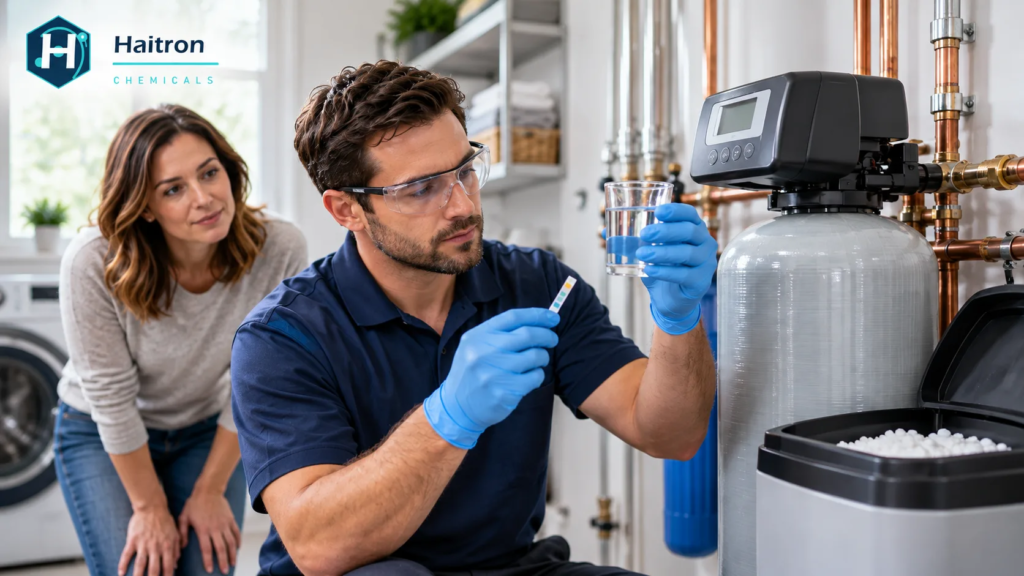
Before you call the first result for “water softener near me,” do three simple things. Test your water, work out what size you need, and get at least three written quotes. That way you make the choice, not the salesperson.
Most people start to notice hard water problems above about 7 grains per gallon. Grains per gallon (gpg) is just a way to measure how much hard mineral is in your water. This guide shows you how to check yours, what to ask local companies, and what a fair quote looks like.
Do You Really Need a Water Softener?
Hard water has lots of calcium and magnesium in it. It isn’t a health risk. The USGS notes that the EPA sets no legal limit for hardness. But it does leave a crusty scale on taps, spots on glasses and buildup inside your water heater.
How to Test Your Water First
You have three good options:
- City water: your water company sends a yearly water quality report. It usually lists hardness. Search online for your utility’s name plus “water quality report.”
- Well water: use an accredited lab. NDSU Extension advises a lab test before you buy anything, because it also shows iron, manganese and other problems a softener can’t fix.
- Free dealer tests: these are fine as a second opinion. Just ask for the results in writing.
What Your Hardness Number Means
| Hardness level | mg/L (same as ppm) | Grains per gallon | Do you need a softener? |
| Soft | 0 to 60 | 0 to 3.5 | No |
| Moderately hard | 61 to 120 | 3.5 to 7 | Optional |
| Hard | 121 to 180 | 7 to 10.5 | Usually worth it |
| Very hard | Over 180 | Over 10.5 | Yes, strongly |
These bands come from the USGS. If your report shows mg/L, divide by 17.1 to get grains per gallon.
Which Types of Water Softeners Actually Work?
Only one kind truly removes hardness: an ion exchange softener. Inside the tank are tiny resin beads. As water flows past, the beads grab calcium and magnesium and swap in sodium. Think of it like trading hard marbles for soft ones.
When the beads are full, the system rinses them with salty water called brine. This recharge is called regeneration.
| Type | Removes hardness? | Best for | Keep in mind |
| Salt based softener | Yes | Hard and very hard water | Adds a little sodium |
| Same unit using potassium chloride | Yes | People avoiding sodium | Costs more and uses about 10% more salt (NDSU) |
| Salt free conditioner | No, it only aims to reduce scale | Areas that ban brine | Isn’t tested under NSF/ANSI 44, the softener standard |
| Magnetic or electronic device | No | Not recommended | NDSU cites research showing no change in calcium |
What Size Water Softener Do You Need?
Size depends on two numbers: how hard your water is and how much you use. A good company will show you this math on paper.
- Find your daily water use on your water bill (monthly gallons divided by 30).
- Multiply it by your hardness in grains per gallon.
- For example, 300 gallons a day times 15 gpg equals 4,500 grains a day.
Then ask how often the system will regenerate at that load. A unit that’s too small wastes salt. One that’s too big costs more than you need to spend.
Iron matters too. Standard softeners can handle up to about 10 ppm of iron and manganese, says NDSU. Above that, you may need a separate iron filter. If you’re on a well, our guide on removing manganese from well water explains your options.
How to Choose From Your Water Softener Near Me Results
Pick the company with the clearest written quote, not the biggest discount. Shortlist three local options, such as a water treatment dealer, a licensed plumber and a big store installer. Then ask each one the same questions.
10 Questions to Ask Before You Sign
- What brand, model and grain capacity are you installing?
- What control valve does it use, and can other plumbers service it?
- Is it certified to NSF/ANSI 44 or by the WQA?
- What resin is inside the tank?
- How did you size it? Can I see the math?
- Does it regenerate based on water use or on a timer?
- Does the price include the bypass valve, drain line, permits and old unit removal?
- What does the warranty cover (tank, valve, resin, labor), and for how long?
- How much salt will I use each year?
- Do you have a no salt option if my area limits brine?
Warning Signs to Watch For
Walk away if you feel pushed to sign the same day. Be careful with quotes that skip the model number, promise health cures, or offer rentals that cost far more than buying.
What Does a Fair Water Softener Quote Include?
Prices vary a lot. HomeAdvisor and Angi data, as reported by Bob Vila, put the range at $200 to $6,000, with $1,500 as the average. NDSU lists store prices for the units alone at about $400 to $2,700.
| Quote item | What it should show |
| Equipment | Brand, model, capacity, valve and resin |
| Installation | Labor, bypass valve, drain line and permits |
| Water test | Hardness, iron, manganese and pH in writing |
| Running costs | Salt is about $5 to $10 per 40 pound bag; potassium chloride can cost up to $25 (NDSU) |
| Warranty | Separate terms for each part and for labor |
Remember, a higher price doesn’t mean better results. NDSU notes that a moderately priced unit can work just as well.
The Resin Question Most Quotes Skip
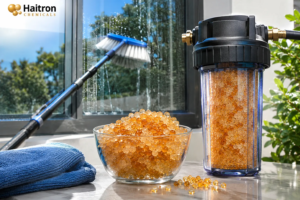
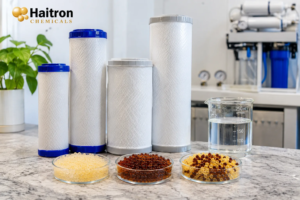
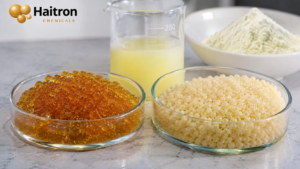
The resin is the part that actually softens your water. It looks like tiny amber beads, and every softener depends on it.
Many softeners use resin with about 8% crosslink, and some use 10% for tougher beads. Crosslink is how tightly each bead is built, a bit like the weave in a basket. Our own softening grades are 7% and 8% gel strong acid cation resin.
City water often contains chlorine or chloramine, which slowly wears resin down. Ask if a carbon filter comes before the softener. Our guide to chloramine removal explains how that works. Also ask if the tank can be “rebedded,” meaning the old resin is swapped for new without replacing the whole system.
Check Local Rules Before You Buy
Some places limit salt based softeners. In California, Water Code section 13148 lets local sewer agencies restrict or even ban softeners that send brine down the drain. Call your sewer district first.
If you have a septic system, NDSU warns that regeneration water can overload small systems. Also know that softening adds about 8 mg/L of sodium for every grain removed. If you’re on a low sodium diet, keep one kitchen tap unsoftened. And don’t water houseplants or gardens with softened water.
Conclusion
A smart water softener near me search starts with your own water test, not a sales visit. Know your hardness, do the sizing math, and compare three written quotes using the questions above. If you’d like to explore other ways to handle hard water, our guide on how to remove calcium from water compares the main methods.
FAQs
Can I install a water softener myself?
Yes, if you’re comfortable cutting into your main water line and adding a drain line. Check your local permit rules first, or hire a licensed plumber.
Is softened water safe to drink?
For most people, yes. It has a little added sodium, so people on low sodium diets should talk to their doctor.
How long does a water softener last?
It depends on your water and how much you use. The resin usually wears out before the tank, and it can often be replaced on its own.
Does Haitron sell or install home water softeners?
No. Haitron makes ion exchange resins for water treatment, including the kind used for softening. We don’t sell or install home systems, so we have no stake in which company you pick from your water softener near me.