Tannin Removal From Well Water: A Simple Guide Anyone Can Follow
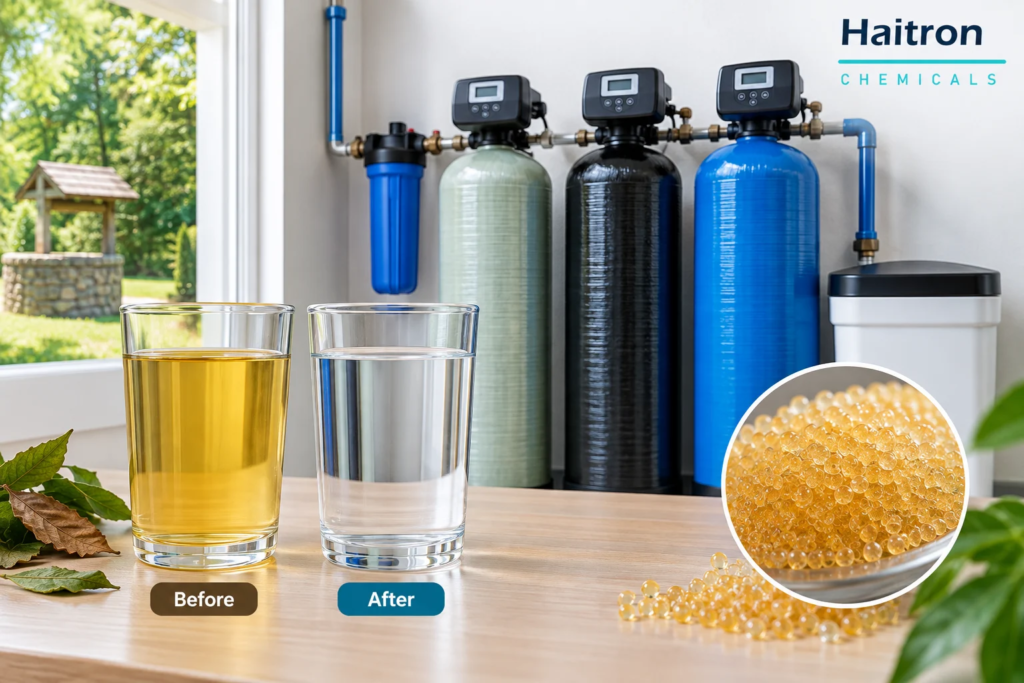
Does your well water look yellow, like weak tea? That color is often caused by tannins. For the whole house, the best tannin removal from well water comes from a tannin filter filled with special resin, with a water softener in front of it. If you only care about drinking water, a small reverse osmosis filter under the kitchen sink works well. This easy guide to tannin removal from well water shows you how to check your water, pick the right system, and keep it working.
What Are Tannins?
Tannins come from old leaves, roots, and plants that rot in the soil. Rain soaks through that soil and carries the color down into the ground. Then your well pulls that water into your home.
It works a lot like making tea.
Tannins show up most in shallow wells and in wet, low land near swamps or the coast. They often get worse after big storms and in the fall, when leaves drop.
Signs you may have tannins in your well water:
- Yellow or light brown water
- Yellow stains on clothes, sinks, and toilets
- A musty or earthy smell
- A slightly sour or bitter taste
Are Tannins in Well Water Harmful?
The Water Systems Council says tannins are a looks and taste problem, not a health problem. But tannins can be a sign that rainwater is reaching your well. So it is smart to test for germs too. Our guide on what is well water safe to drink explains what to test.
One more tip: do not pour bleach into tannin water on your own. Chlorine can mix with tannins and make unwanted byproducts.
Step 1: Find Out If It Is Really Tannins
Iron can look just like tannins. But iron needs a different filter. So test first, then buy.
Try the Glass Test.
Fill a clear glass with cold water. Leave it alone overnight. In the morning, take a look.
- Color sinks to the bottom: it is probably iron.
- Color stays the same all over: it is probably tannins.
- Some color sinks, but the water is still yellow: you may have both.
This test is only a clue. A lab test gives you the real answer.
What the Lab Should Check
Ask a certified lab to test for:
- Tannins
- Iron and manganese
- Hardness (how much calcium and magnesium is in the water)
- pH (how sour or mild the water is)
- Chloride and sulfate
- Bacteria
These numbers tell you which system will really work in your home.
Best Ways to Remove Tannins From Well Water
1. Tannin Filter With Anion Resin (Best for the Whole House)
Tannins carry a tiny negative charge. A tannin filter is filled with small beads called anion resin. The beads have a positive charge, so they grab tannins like a magnet and let clean water flow out. This bead is a type of strong base anion resin.
When the beads get full, the system rinses them with salt water. Then they are ready to work again, just like a water softener.
2. Reverse Osmosis (Best for Drinking Water)
Reverse osmosis pushes water through a very fine screen. Tannins are big, so they get stopped. It only cleans water at one tap, so it will not stop stains on your laundry.
3. Activated Carbon (Only for Light Color)
Carbon can clean up a light yellow tint or a bad taste. But tannins fill it up fast. It works best as an extra step after a tannin filter.
4. Oxidation and Filtering (For Tricky Wells)
This method breaks tannins into tiny bits that a filter can catch. It helps when your well also has iron or a rotten egg smell. It has many steps, so let a water pro set it up.
Will a Water Softener Remove Tannins?
No. A normal softener uses strong acid cation resin. It pulls out hard minerals like calcium and magnesium, but it does not catch tannins.
A softener is still a great helper, though. Hard water can leave white, crusty buildup inside a tannin filter. That is why the softener should go first. To see why hardness matters, read hard water vs soft water. If you are planning your budget, check how much is a water softener.
How to Pick the Right Tannin Filter for Well Water
There is no single answer for tannin removal from well water. The right choice depends on your lab test.
- Only your drinking water bothers you: choose reverse osmosis under the sink.
- Stains all over the house and soft water: choose a tannin filter.
- Tannins plus hard water: put a softener first, then the tannin filter.
- Tannins plus lots of iron: ask a water pro to plan the order.
A good setup order for most homes:
- Sediment filter
- Iron filter (if needed)
- Water softener
- Tannin filter
- UV light (if needed)
- Reverse osmosis at the kitchen sink (optional)
Always put the tannin filter before the UV light. Yellow water blocks the light, so it cannot kill germs well.
Simple Tips Before You Buy
- Size the system for your worst season, not just one test day.
- Ask for resin that is safe for drinking water and already rinsed.
- Look for systems certified by NSF or WQA.
- Test your water again after the system is put in.
Common Mistakes to Avoid
- Buying a filter before testing your water.
- Thinking a normal softener will fix tannins.
- Using carbon as the only fix for the whole house.
- Putting the tannin filter before the softener when water is hard.
- Letting chlorine flow into the tannin resin.
- Ignoring a fishy smell from the tap.
How to Take Care of Your Tannin Filter
Keep the salt tank full. The right salt matters too, and our guide on water softener salt types can help you choose.
Every so often, the resin needs a deep clean. The Water Systems Council suggests salt water mixed with baking soda. It is time to clean when:
- The yellow color starts coming back
- The water smells a little fishy
If your water tastes a bit salty, test the chloride level. Drinking from a reverse osmosis tap can help.
Frequently Asked Questions
Is it safe to drink well water with tannins?
Tannins are not known to hurt your health. They mostly change the color, smell, and taste. Still, test your well for germs.
Does reverse osmosis remove tannins?
Yes. Tannins are too big to pass through a reverse osmosis filter. But it only cleans water at one tap.
Why is my well water more yellow after rain?
Rain washes more rotting plant matter from the soil into the ground. That sends more tannins into your well.
How long does tannin resin last?
It depends on your water. Hard water, iron, and chlorine can wear it out faster. Regular cleaning helps it last longer.
Final Thoughts
Tannin removal from well water gets easy when you follow three steps: test your water, pick the right system, and take care of it. For most homes, a water softener plus a tannin filter is the best path to lasting tannin removal from well water. If you are a dealer working on a tannin project, send us your water test through our request a quote page, and our team will help you choose the right resin.