Selenium Removal from Water: Methods, Effectiveness, and How to Choose the Right One
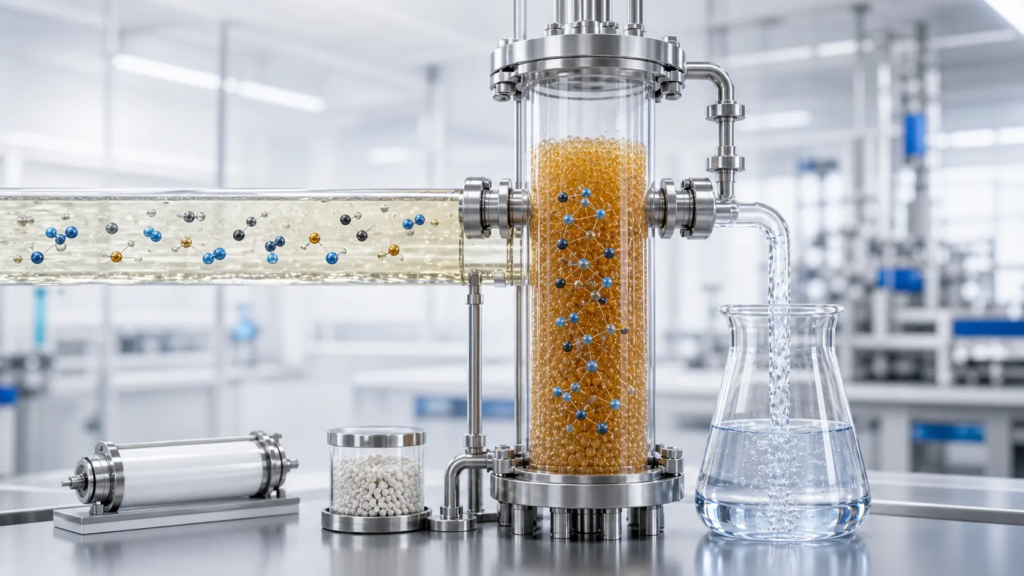
Selenium removal from water usually comes down to one of three proven methods: ion exchange with anion resin, reverse osmosis, or activated alumina adsorption. Which one will actually work best for you depends on your specific water source, the amount of selenium present, and other substances in the water that might interfere with treatment. Ion exchange is generally the go-to option among these.
When properly installed and maintained, it can eliminate roughly 90 to 95 percent of selenate, which happens to be the most common form of selenium found in natural water. However, there is one detail most guides fail to mention. The success of any treatment method depends on correctly identifying which chemical form of selenium is present in your water. Overlooking this step is often the real reason so many treatment systems end up underperforming.
What Is Selenium, and Why Does It Need to Come Out of Water?
Selenium is a trace element that occurs naturally in rock and soil. It ends up in water through weathering, agricultural drainage, mining runoff, oil refining, and coal ash. Your body does need a small amount of it, since it’s actually an essential nutrient. The problem begins once concentrations climb above a certain threshold, where prolonged exposure has been tied to changes in hair and fingernails, fatigue, and effects on the peripheral nervous system.
What’s the EPA Limit for Selenium in Water?
The EPA doesn’t just pull these numbers out of thin air. It sets Maximum Contaminant Levels (MCLs) as close to a health-based target as it reasonably can, while balancing that against available treatment technology and cost, according to the EPA’s National Primary Drinking Water Regulations. For selenium, that translates to an MCL and MCLG of 0.05 mg/L, or 50 parts per billion (ppb).
Even so, don’t assume that the 50 ppb figure applies directly to your situation. Limits shift depending on the country, and if you’re handling industrial or agricultural discharge rather than drinking water, allowed levels are often far stricter, sometimes dropping to just a few ppb. Meeting that tighter standard is a noticeably tougher engineering challenge than hitting the standard drinking water MCL, so it’s best to confirm your actual regulatory target before building a system around a number pulled from somewhere online.
Why Selenium Is So Hard to Treat
Three things make selenium genuinely difficult, compared to more straightforward contaminants: it usually shows up at very low, dilute concentrations; it exists in more than one chemical form, each behaving differently in treatment; and once you pull it out of the water, it’s now sitting in a concentrated residual stream that still needs somewhere safe to go.
Selenate vs. Selenite: The Detail That Actually Decides Which Method Works
This is the part almost nobody explains clearly, and it’s the one that determines whether your treatment system performs the way it’s supposed to.
Selenium in water shows up mainly as two oxyanions, selenate (SeO₄²⁻) and selenite (SeO₃²⁻) , and they don’t behave the same way at all. Research on strong-base anion exchange resin has found a clear preference order: the resin favors selenate over sulfate, and it has a much weaker pull on selenite (source: ACS ES&T Water, 2025). In plain terms, that means a system built and tuned for selenate can fall flat if your water is actually selenite-heavy or a mix of both. Some treatment designs get around this by chemically converting selenate to selenite (or the reverse) before the water even reaches the resin, just to give the system one consistent species to target.
Then there’s sulfate. It’s chemically similar enough to selenium’s oxyanions and usually present in far higher concentrations that it competes for the same spots on the resin. One patent on selenium removal from refinery wastewater put it bluntly: sulfur competes with selenium and lowers the resin’s capacity to remove it. In the field, high sulfate levels are the single most common reason an ion exchange system quietly underperforms whatever number it hit in the lab.
The Main Methods for Removing Selenium from Water
Ion Exchange with Anion Exchange Resin
Strong base anion (SBA) resin is the real workhorse here, used across both municipal and industrial systems. Under the right conditions, meaning low sulfate and selenate-dominant water, it can remove 90 to 95 percent of the selenium present. It also runs well as a continuous process that only needs periodic regeneration, which is a big part of why it’s the default choice for so many systems. Weak base anion (WBA) resin shows up in the mix too, usually as a lower regenerant option when the water chemistry happens to support it.
Reverse Osmosis
RO membranes take a completely different approach. They physically reject dissolved ions, selenium included, no matter which chemical form it happens to be in. That’s a genuine advantage over ion exchange, which tends to be picky about speciation. The trade off comes down to cost. RO systems are more expensive to build and operate, they generate a concentrated reject stream that still needs to be dealt with, and they typically handle less volume than ion exchange for a similar footprint.
Activated Alumina Adsorption
Activated alumina flips the script compared to ion exchange, since it tends to perform better on selenite than on selenate in flow-through systems. That makes it a genuinely useful option, sometimes used on its own and sometimes paired with another method, particularly when selenite turns out to be the dominant species in your water.
Biological or Chemical Reduction
For industrial and mining wastewater carrying heavier selenium loads, biological treatment offers yet another route. It reduces the soluble selenium oxyanions down into insoluble elemental selenium, which can then be physically separated out. This process takes tighter control, meaning careful management of oxygen, nitrate, and carbon source, and it’s really more of a wastewater treatment tool than something used for drinking water systems.
How the Methods Stack Up
| Method | Typical Removal Efficiency | Best Suited For | Key Limitation |
| Ion exchange (SBA resin) | 90–95% (selenate) | Low-sulfate drinking water & industrial streams | Sulfate competition; species-dependent |
| Reverse osmosis | High, species-independent | High-purity requirements, small-to-mid volumes | High cost; concentrate disposal |
| Activated alumina | Higher on selenite than selenate | Selenite-dominant water | Lower selenate performance |
| Biological reduction | Variable, load-dependent | High-concentration industrial/mining wastewater | Complex process control |
How to Actually Choose the Right Method
- Test for speciation, not just total selenium. The selenate to selenite ratio is what really tells you which technology has a genuine shot at working.
- Check your sulfate levels first. High sulfate changes the whole ion exchange equation and may mean you need pretreatment or a different resin strategy altogether.
- Match your target number to the right technology. Hitting a 50 ppb drinking water MCL and hitting a 2 to 5 ppb industrial discharge limit are two very different engineering problems, even though both count as removing selenium.
- Plan for the residual from day one. Every method that actually works ends up concentrating selenium somewhere, whether that’s a brine, spent resin, or sludge, and that stream needs a disposal plan before the system gets built, not after.
- Pilot before committing to full scale. Since so much depends on your specific water chemistry, bench or pilot testing on your actual source water is standard practice before sizing a full ion exchange or RO system.
Mistakes That Show Up Again and Again in Selenium Treatment Design
- Designing around total selenium alone and never checking speciation
- Underestimating how much sulfate cuts into resin capacity and regeneration frequency
- Assuming a drinking-water solution will scale to industrial discharge limits without changes
- Leaving residual and brine disposal as an afterthought instead of a design input
- Treating the selenate/selenite conversion step as optional rather than central to whether the system works at all
Frequently Asked Questions
What is the EPA limit for selenium in drinking water?
50 ppb. That’s 0.05 mg/L, and it doubles as the MCLG. The EPA doesn’t expect health issues at that level.
Does reverse osmosis remove selenium?
Yes. RO catches selenium, whether it’s selenate or selenite. Cost goes up with volume, though, more than ion exchange would.
Can activated carbon remove selenium from water?
No, not the standard kind. That’s built for organics. Activated alumina is what treatment plants actually use for selenium.
Why does sulfate interfere with selenium removal?
It’s a lookalike. Sulfate competes with selenate and selenite for the same resin sites. More sulfate, less room for selenium.
Is selenite or selenate easier to remove from water?
Depends on the method. Resin favors selenate. Alumina favors selenite. Know which one you’ve got before you pick.
Selenium removal from water really comes down to the specific chemistry of your site, and that can vary more than people expect. The numbers mentioned throughout this article are based on general EPA guidance and published research on ion exchange systems, not a guarantee for your particular water source. Before locking in a system design, it’s worth testing your actual water and, if possible, running a pilot trial first to confirm real-world removal rates.