Is Softened Water Bad for Plants? A Simple Guide
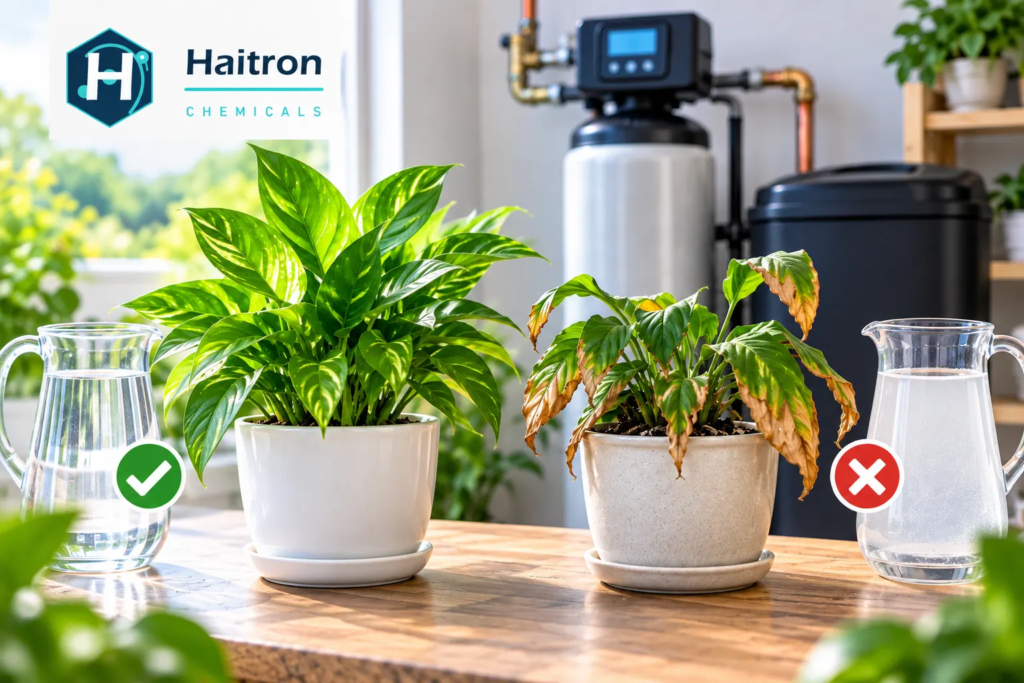
Is softened water bad for plants? Most of the time, yes. If your plants drink softened water every day, they can slowly get sick. So if you keep wondering, “Is softened water bad for plants?” here is the short answer: a little now and then is okay, but a lot is not.
Let’s look at why, using easy words.
What Is Softened Water?
Some tap water carries tiny bits of rock in it. We call this hard water. The two main rock minerals are calcium and magnesium. They leave white spots on cups, taps, and showers.
A water softener is a machine that pulls those minerals out. If you want the full story, read our guide on hard water vs soft water.
So how does it work? Inside the softener are lots of tiny beads. The beads grab calcium and magnesium. Then they let go of sodium. Sodium is the main part of salt.
The water goes in with minerals and comes out with sodium. That is softened water.
Why Sodium Hurts Plants
Plants need only a tiny bit of salt. Too much sodium causes three big problems.
1. Roots get thirsty. Salt in the soil makes it hard for roots to drink. Your plant can droop even when the soil feels wet.
2. Leaves get burned. Sodium travels up into the leaves. The tips turn brown and crispy.
3. Soil gets hard. Calcium keeps soil soft and crumbly. Sodium does the opposite. It packs clay soil tight, so water can’t drain away.
Here is the sneaky part. A softener adds sodium and takes away calcium at the same time. The soil loses its helper and gets a troublemaker.
The beads inside a softener are made from ion exchange resin, and they do their job very well. That is great for your kettle, but not for your flower pots.
How Much Sodium Is in Softened Water?
It depends on how hard your water was to begin with. Harder water means more sodium after softening.
Here is an easy rule. Take your water hardness in grains per gallon and multiply it by about 8. That tells you roughly how much sodium was added, in milligrams per liter (mg/L).
- 3 grains: about 24 mg/L of sodium
- 5 grains: about 39 mg/L
- 7 grains: about 55 mg/L
- 10 grains: about 79 mg/L
- 15 grains: about 118 mg/L
- 20 grains: about 157 mg/L
Plant experts at Penn State Extension say sodium above 50 mg/L can start to hurt sensitive plants. So once your water is harder than about 6 or 7 grains, softened water is already past that line.
Not sure how hard your water is? Check your softener settings or your yearly water report. If you use a private well, our page is well water safe to drink explains how testing works.
Is Softened Water Bad for Plants Everywhere?
No. Where your plant lives makes a big difference.
High risk
- Houseplants in pots
- Seedlings and baby plants
- Plants grown in water (hydroponics)
Pots never get rain to wash the salt away. So salt buildup happens fast.
Medium risk
- Vegetable gardens you water often
- Clay soil that drains slowly
- Dry places with little rain
Low risk
- Lawns and garden beds in rainy places
Rain pushes salt deep into the ground, away from the roots. A few waterings with softened water won’t do much harm there.
Signs Your Plants Are Unhappy
Look out for these clues:
- Brown tips on the leaves
- White crust on the soil or around the pot rim
- Slow growth
- Drooping, even when the soil is damp
- Yellow leaves that fall off
These signs can also come from too much plant food or dry air. But if the trouble started after you got a softener, your water is a good suspect.
Best Water for Plants When You Have a Softener
Good news! You have plenty of easy choices.
Rainwater. This is the best pick. Set a barrel under your roof drain. Rain is naturally soft, but it has almost no sodium, so plants love it.
Unsoftened tap water. Ask a plumber to hook up an outside tap before the softener. Many softeners also have a bypass valve. Turn it, fill your watering can, then turn it back.
Reverse osmosis water. An under-sink RO filter removes most of the sodium. It also takes out good minerals, so feed your plants with a plant food that has calcium and magnesium.
Distilled water. It has no sodium at all. It works well if you only have a few small plants. Learn more in our post: can you drink distilled water?
Potassium chloride. You can fill your softener with potassium chloride instead of regular salt. Then it adds potassium, not sodium. Potassium is actually plant food! It costs more, though. You can compare options in our guide to water softener salt types.
Potassium-sweetened water is much safer for plants. It still adds some salts, so keep an eye on pots that drain poorly.
Already Used Softened Water? Here Is What to Do
Don’t worry. Most plants can bounce back.
- Stop giving them softened water.
- Gently scrape off any white crust on top of the soil.
- Put the pot in a sink or tub.
- Slowly pour clean rainwater or unsoftened water through the soil. Use about twice the size of the pot. A 6-inch pot holds about 5 cups, so pour about 10 cups.
- Let it drain all the way. Empty the saucer so the salt doesn’t soak back in.
- Repeat every 4 to 6 months.
If your plant still looks sad after that, move it into fresh potting soil.
Easy Mistakes to Avoid
- Mixing up soft water and softened water. Rain is soft and safe. Softened tap water carries sodium.
- Flushing pots with softened water. That only adds more sodium.
- Boiling the water. Boiling does not take sodium out.
- Trusting a pitcher filter. Most basic filters don’t remove sodium.
- Thinking your garden hose is safe. In many homes, outside taps are softened too. Check first.
Quick Questions
Can I water plants with softened water?
Once in a while, yes. Every day, no, especially for houseplants.
Is soft water bad for plants?
Natural soft water, like rain, is great. Softened water from a salt softener is the real problem.
Can I water my lawn with softened water?
Now and then is fine if you get lots of rain. Watering every day in a dry area can hurt your grass over time.
Can I use softened water in my vegetable garden?
It’s better not to. Veggies need lots of water, so sodium piles up quickly.
Does mixing softened water with rainwater help?
A little. Salt still builds up, just more slowly.
The Bottom Line
So, is softened water bad for plants? For houseplants, seedlings, and gardens you water a lot, the answer is yes. For a rainy lawn once in a while, not really. Check your water hardness today. If it’s above about 7 grains, give your plants rainwater or unsoftened water instead. Still shopping for a system? Look at how much is a water softener costs before you buy it. Now you know the real answer to “is softened water bad for plants,” and your plants will thank you.