How to Make Distilled Water at Home (and Check That It Worked)
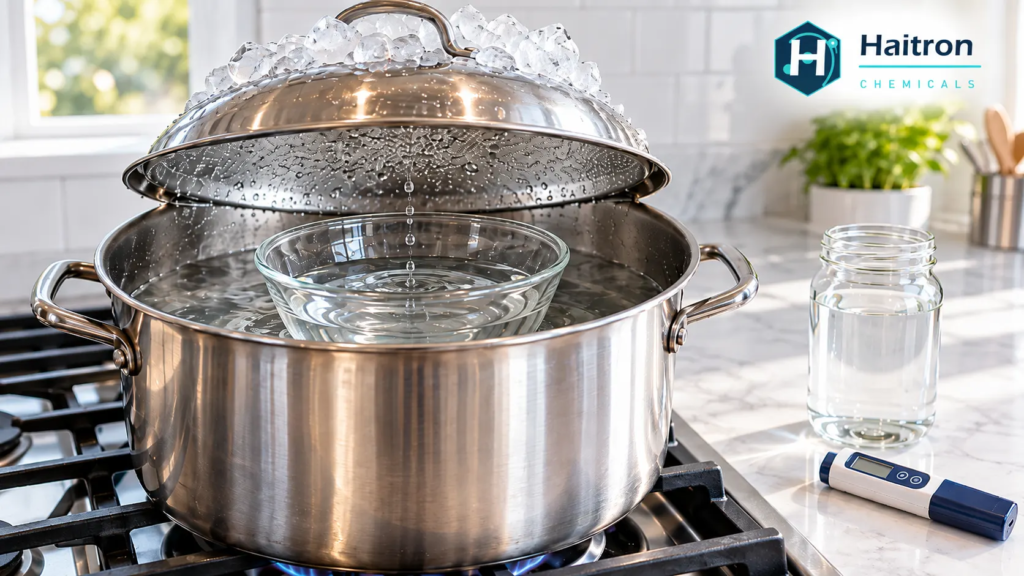
Here’s how to make distilled water at home: fill a big pot halfway with tap water, float a glass bowl inside, and set the lid upside down with ice on top. As the water simmers, steam hits the cold lid, turns back into water and drips into the bowl. The minerals stay behind in the pot.
It works, but it’s slow and uses a lot of energy. Below you’ll find the simple steps, what a batch really costs, how to test your result, and when another kind of water is the better pick.
What You Need
You probably have most of this in your kitchen already:
- A large stainless steel pot (about 3 to 5 gallons) with a domed lid
- A heat safe glass or metal bowl that fits inside with room around it
- A small metal rack, if the bowl won’t float level
- Ice and oven mitts
- A clean glass jar or food grade bottle with a cap
- A TDS meter if you want to test your water (a cheap pen that measures dissolved minerals)
How to Make Distilled Water, Step by Step
- Fill the pot about halfway with tap water.
- Float the bowl in the water, or set it on the rack so it sits above the water line. Pot water must never splash into the bowl.
- Flip the lid upside down so the handle points into the bowl. Fill the lid with ice. Drops will run to the lowest point and fall into the bowl.
- Heat the water to a gentle simmer, not a hard boil. A hard boil splashes tap water into your bowl. If the bowl water starts bubbling, turn the heat down.
- When the ice melts, pour off the meltwater and add fresh ice. Wear oven mitts, because the lid gets hot.
- Turn off the heat while there’s still water in the pot. That leftover water holds the minerals you’re trying to leave behind.
- Let everything cool. Pour the bowl water into your clean jar and cap it right away.
Think of it like a tiny rain cycle. The pot is the ocean, the steam is the cloud, and the cold lid makes it rain into your bowl.
How Long Does It Take, and What Does It Cost?
Expect about a cup or two of distilled water per hour. Guides online report anything from “a cup every half hour” to “a cup every 45 to 60 minutes.”
Here’s why it’s slow. Turning water into steam takes a lot of energy. Heating 1 liter from room temperature and boiling it all off takes about 0.72 kWh, even in a perfect setup.
| What we measured | Number | How we got it |
| Energy per liter (perfect setup) | About 0.72 kWh | Heating to boiling (about 335 kJ) plus turning it to steam (about 2,257 kJ) |
| Energy per gallon (perfect setup) | About 2.7 kWh | 0.72 kWh times 3.785 liters |
| Electricity cost per gallon | About $0.50 | 2.7 kWh times 18.2 cents, the EIA’s 2026 US average |
| Most steam a 1,000 watt burner can make | About 1.6 liters an hour | Once the water is already boiling |
Real batches cost more and give you less. Steam escapes around the lid, heat leaks into your kitchen, and the bowl only catches part of the drips. University of Nebraska Extension notes that distillation can be one of the most expensive home water treatments to run.
So check the shelf price of a gallon at your store before you start. Knowing how to make distilled water is handy, but buying it is often cheaper.
How to Check Your Distilled Water With a TDS Meter
A TDS meter tells you how much dissolved stuff, mostly minerals and salts, is in your water. It reads in parts per million (ppm). It’s the easiest way to know if your batch worked.
- Test your tap water first and write the number down.
- Test your homemade distilled water once it cools to room temperature.
- Compare the two. Good distilled water reads close to zero.
If your reading is close to your tap number, tap water splashed into the bowl. Simmer more gently next time. For scale, lab stills are built to make water under about 1 ppm. A kitchen pot won’t match that, but it should come in far below your tap water.
Common Mistakes That Ruin a Batch
- Boiling too hard, which splashes minerals into the bowl.
- Let the bowl touch the bottom of the pot, so the bowl water boils too.
- Using a flat lid. Drops run to the edges and miss the bowl.
- Using a plastic bowl, which can soften or bend in the heat.
- Letting the pot boil dry, which can damage the pot.
- Expecting it to remove everything. UNL Extension says some chemicals, like certain solvents and pesticides, boil at or below water’s temperature and can travel with the steam.
Is Homemade Distilled Water Safe?
For drinking, mostly yes. UMass Extension says distillation removes over 99.9% of dissolved materials. It also notes it isn’t fully effective against some bacteria, and the water tastes flat because the minerals are gone. A clean bowl and jar matter just as much as the distilling.
For neti pots and sinus rinses, follow the FDA. Its safe list includes distilled or sterile water bought in stores, tap water boiled for 3 to 5 minutes and cooled, or water from a filter made to trap germs. Homemade water collected in an open bowl isn’t on that list.
For CPAP machines and other medical devices, use exactly what the maker’s manual says.
Distilled vs Boiled vs Deionized vs RO Water
You often don’t need true distilled water. Pick your water based on the job.
| Water type | Remove minerals? | Removes germs? | Good for |
| Store bought distilled | Nearly all | Yes | Neti pots, irons, humidifiers |
| Homemade distilled | Most, if nothing splashes | Mostly, if kept clean | Irons, humidifiers, small jobs |
| Boiled tap water | No | Yes | Sinus rinses (boil 3 to 5 minutes) |
| Deionized (DI) | Most charged minerals | No | Humidifiers, steam irons, rinsing glassware |
| Reverse osmosis (RO) | Most | Not guaranteed | Drinking, coffee, humidifiers |
The EPA notes that deionized and reverse osmosis water have most minerals removed, but they’re usually a little less pure than distilled water.
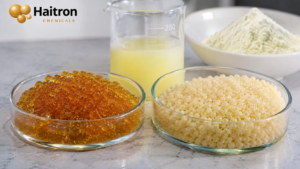
Deionized water is made by running water through mixed bed ion exchange resin. These tiny beads grab dissolved minerals and swap them for the building blocks of pure water. It’s fast and uses no heat, but it won’t remove germs. Push the same idea further, and you get ultrapure water for labs and computer chip factories.
How to Store Distilled Water
Use a clean glass jar or food grade plastic bottle with a tight cap. Write the date on it and keep it somewhere cool and dark.
Once you open it, it’s no longer sterile. Pour it out instead of dipping things into it, and use homemade batches for everyday jobs, not medical ones.
Conclusion
Now you know how to make distilled water with a pot, a bowl and some ice. Simmer gently, keep the ice coming, and check your result with a TDS meter. If you’re tackling hard water at its source, our guide on how to remove calcium from water compares softeners, RO and other fixes.
FAQs
Is distilled water the same as boiled water?
No. Boiling kills germs but keeps all the minerals. Distilling collects only the steam, so the minerals stay behind in the pot.
Can I make distilled water without a stove?
Yes. A countertop water distiller boils and cools water for you automatically. It still uses electricity, so running costs are about the same.
Does distilling remove chlorine?
UNL Extension says distillation can remove chlorine and chloramine, along with lead and many other contaminants. For whole house chlorine or chloramine, read our guide to chloramine removal.
Does Haitron sell distilled water or distillers?
No. Haitron makes ion exchange resins, including the mixed bed resin used to make deionized water. We know water purity well, and that’s why we wrote this simple guide on how to make distilled water at home.